
What’s Actually Different?
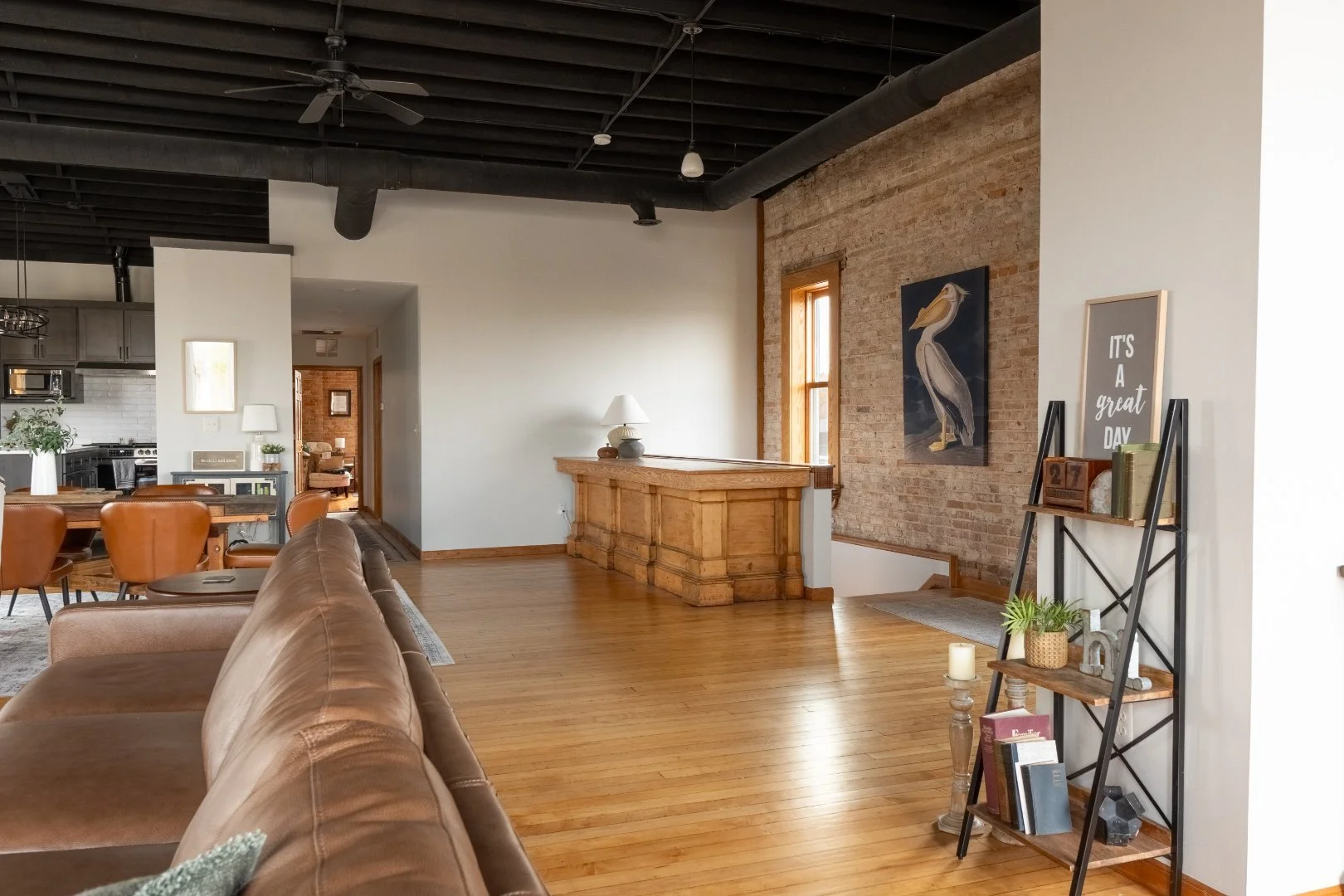
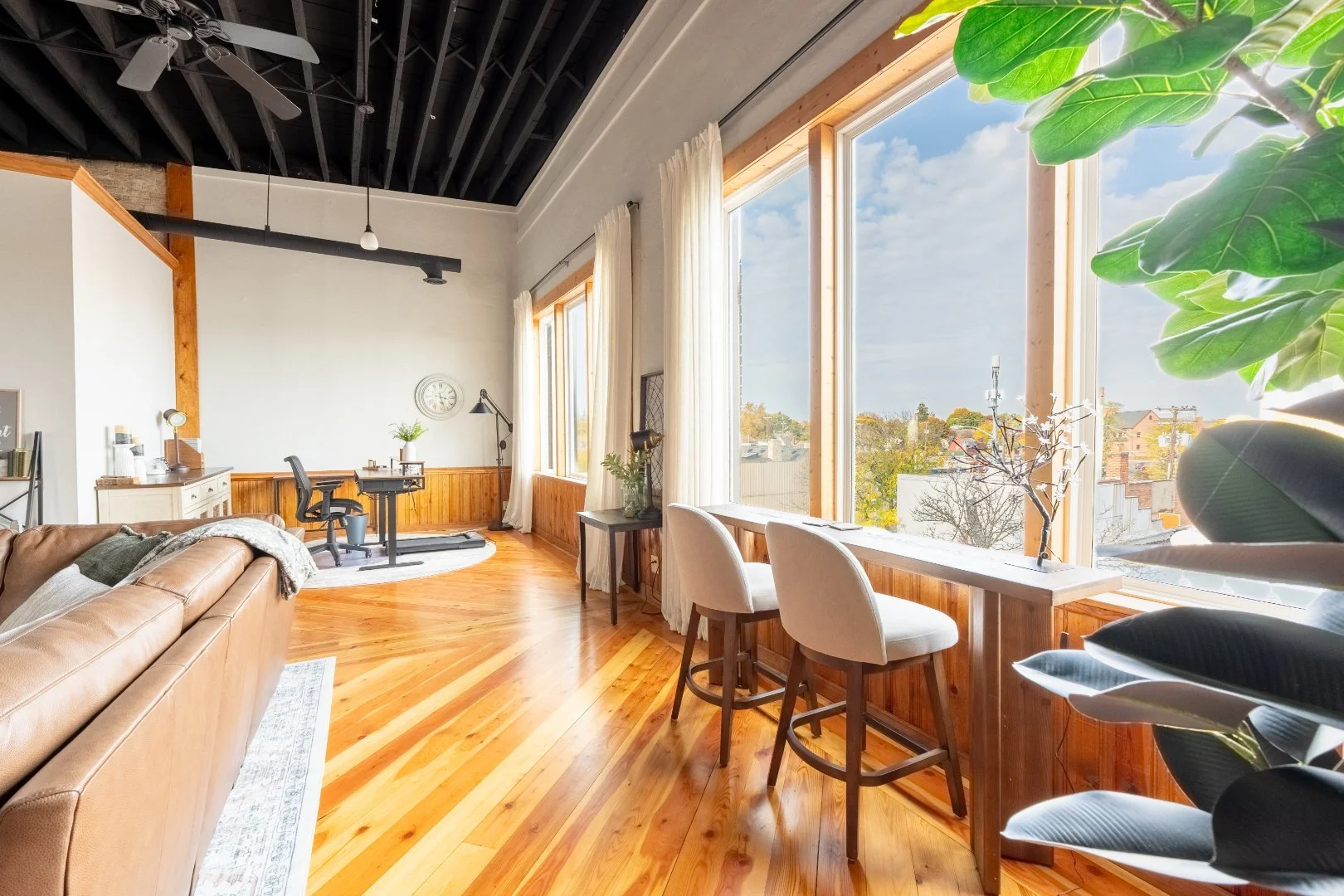
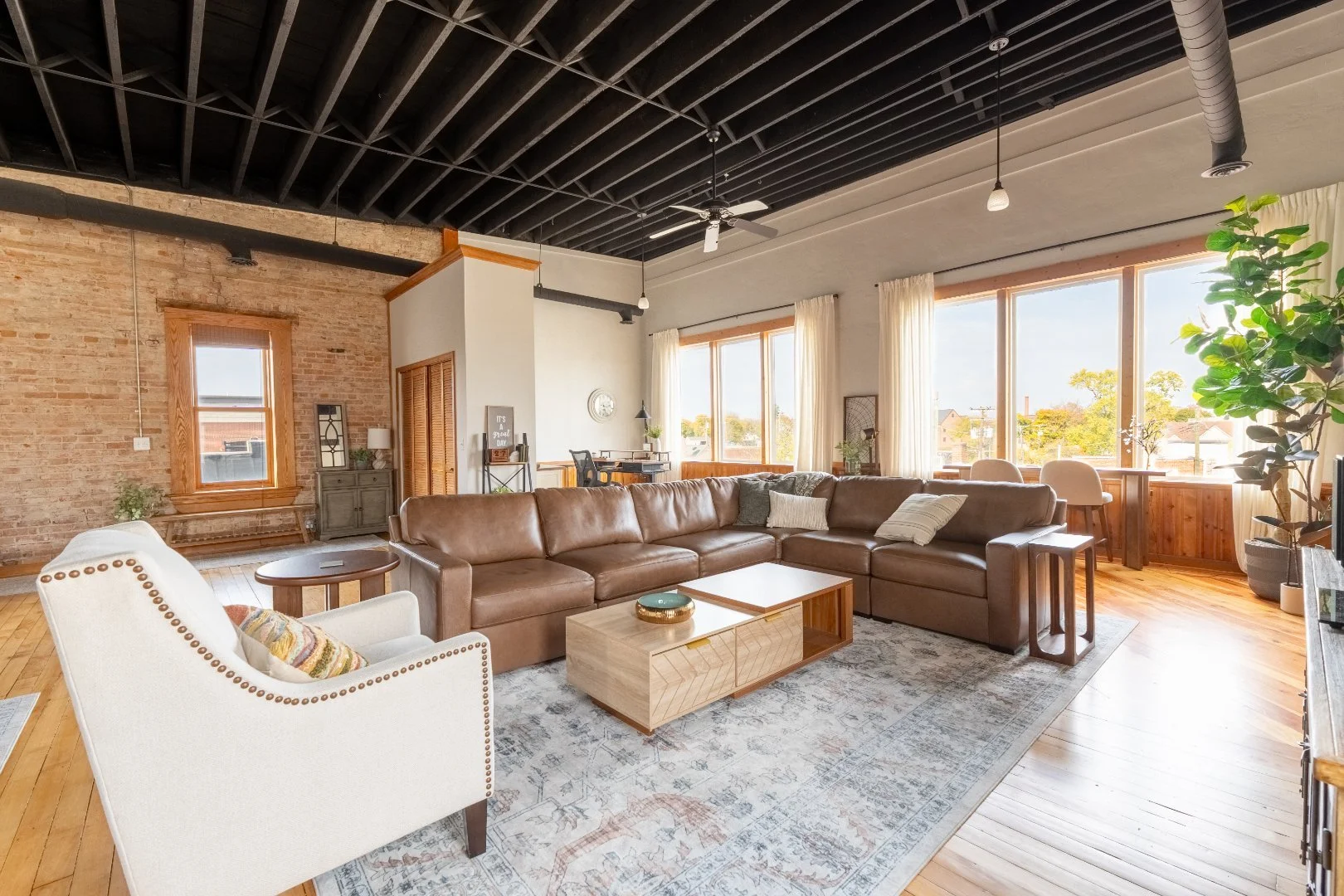
When I shot a 2,500-square-foot loft in downtown Plymouth, MI, I took two different sets of photos in the same space on the same day. One set was real estate style, while the other was short-term rental style. I photographed the same rooms in the same lighting conditions, but worked with two completely different shot lists.
Many people don’t realize this when they’re booking a property photographer. Real estate photos and Airbnb (or other short-term rental) photos are not the same product, and using one in place of the other could cost you.
Here’s how I approach each one, room by room.
The Goal Is Different, So Everything Else Is Too
A real estate buyer is making a huge financial decision. They want to understand the house - how many bedrooms, how big is the kitchen, how does the floorplan flow, what’s the condition. They’re scanning for facts and red flags, and a photo that hides something makes them suspicious or uninterested in booking a showing.
A short-term rental guest is picking a weekend or short trip. They’re not buying the house, but instead, they’re buying a feeling. They want to know if this place looks like a good time, if the bed looks comfortable, and if the coffee setup in the morning is going to be nice.
Buyers want to understand the space. Guests want to imagine the stay. Every other difference comes from that.
Wide Shots vs. Detail Shots
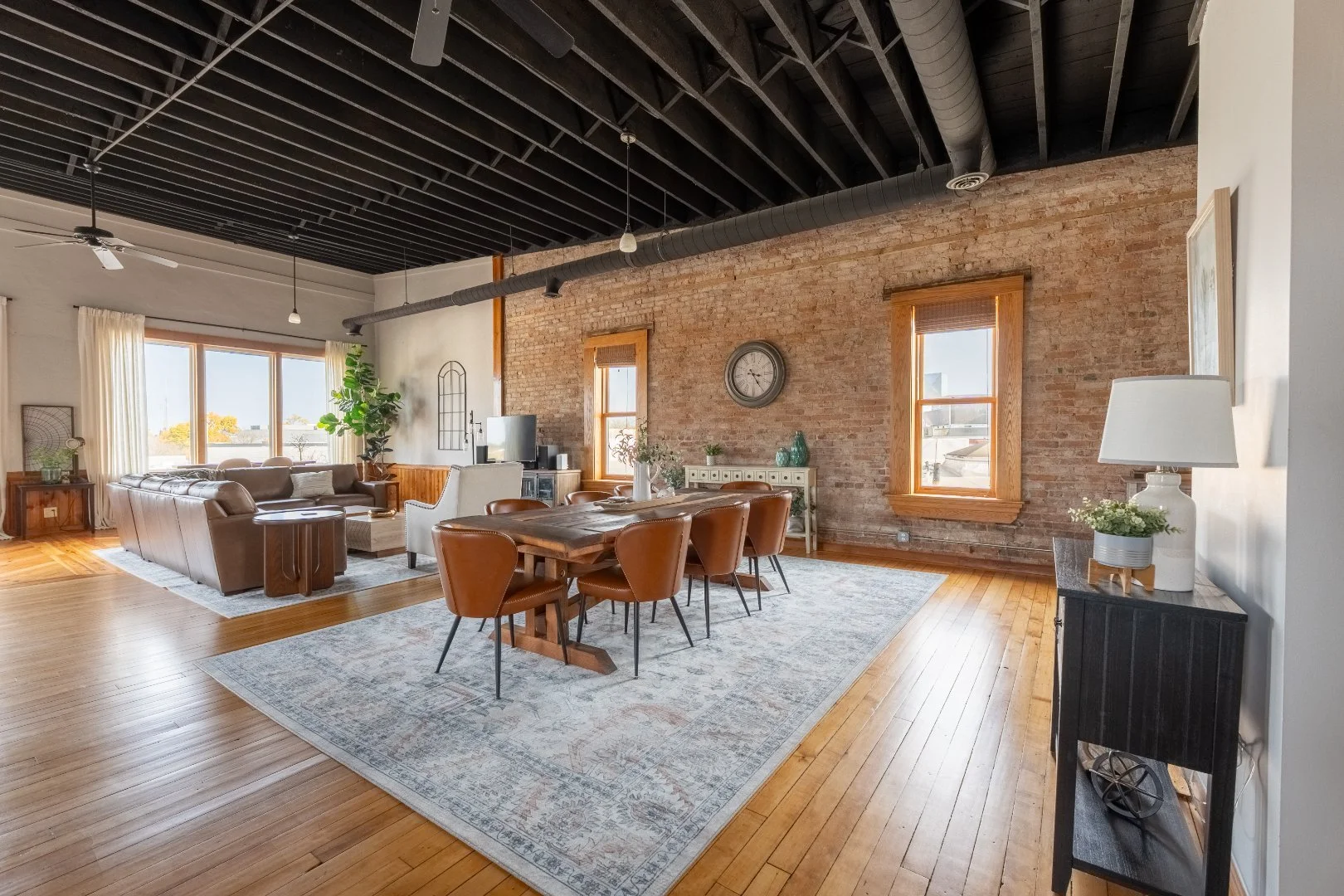
For real estate, I shoot wide and I shoot every room. My Sigma 10-18mm wide-angle lens on the Sony FX30 lets me get a full view of a room from the corner, so buyers can see the whole thing in one frame. Every room gets multiple photos, because skipping a room makes buyers wonder what’s wrong with it.
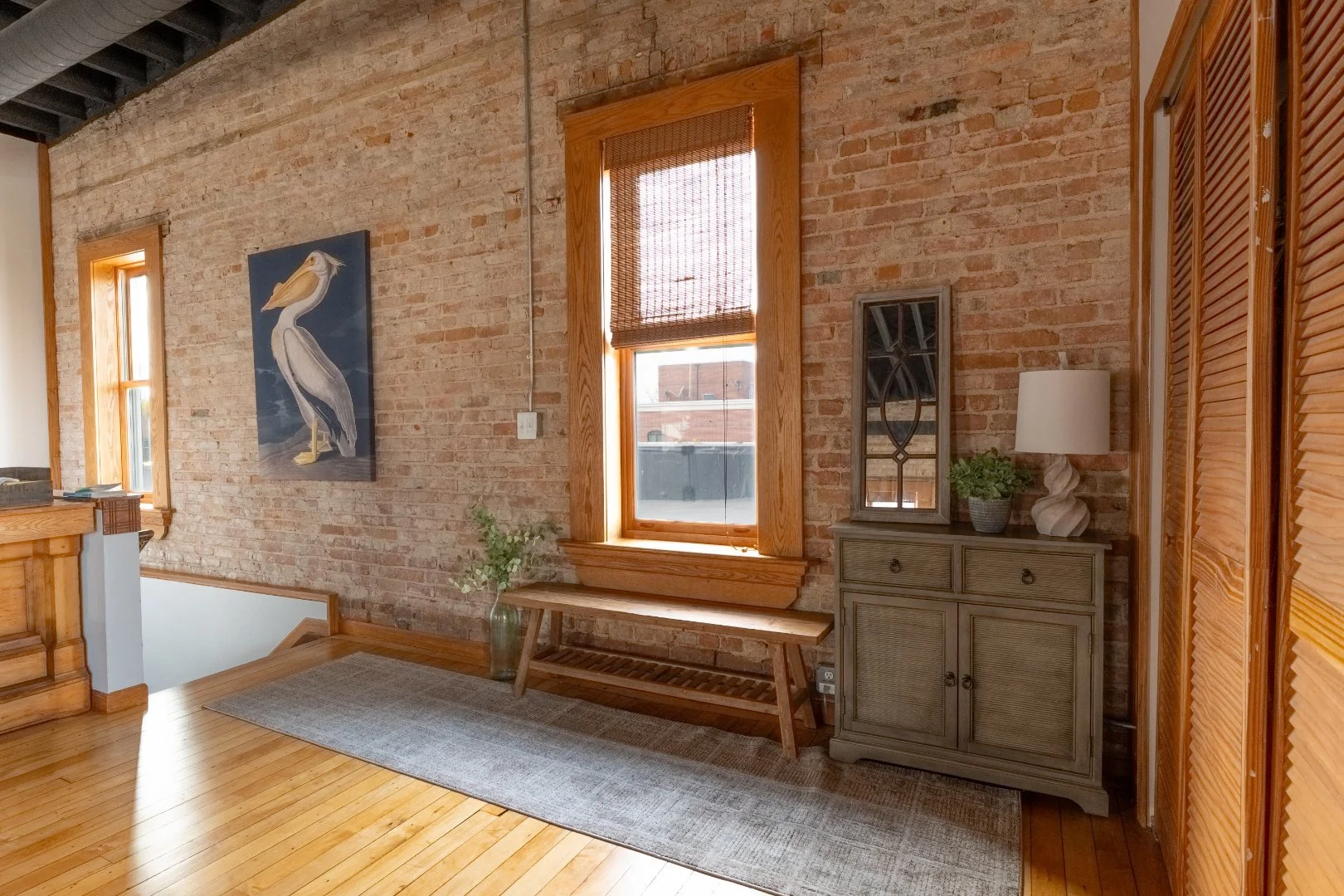
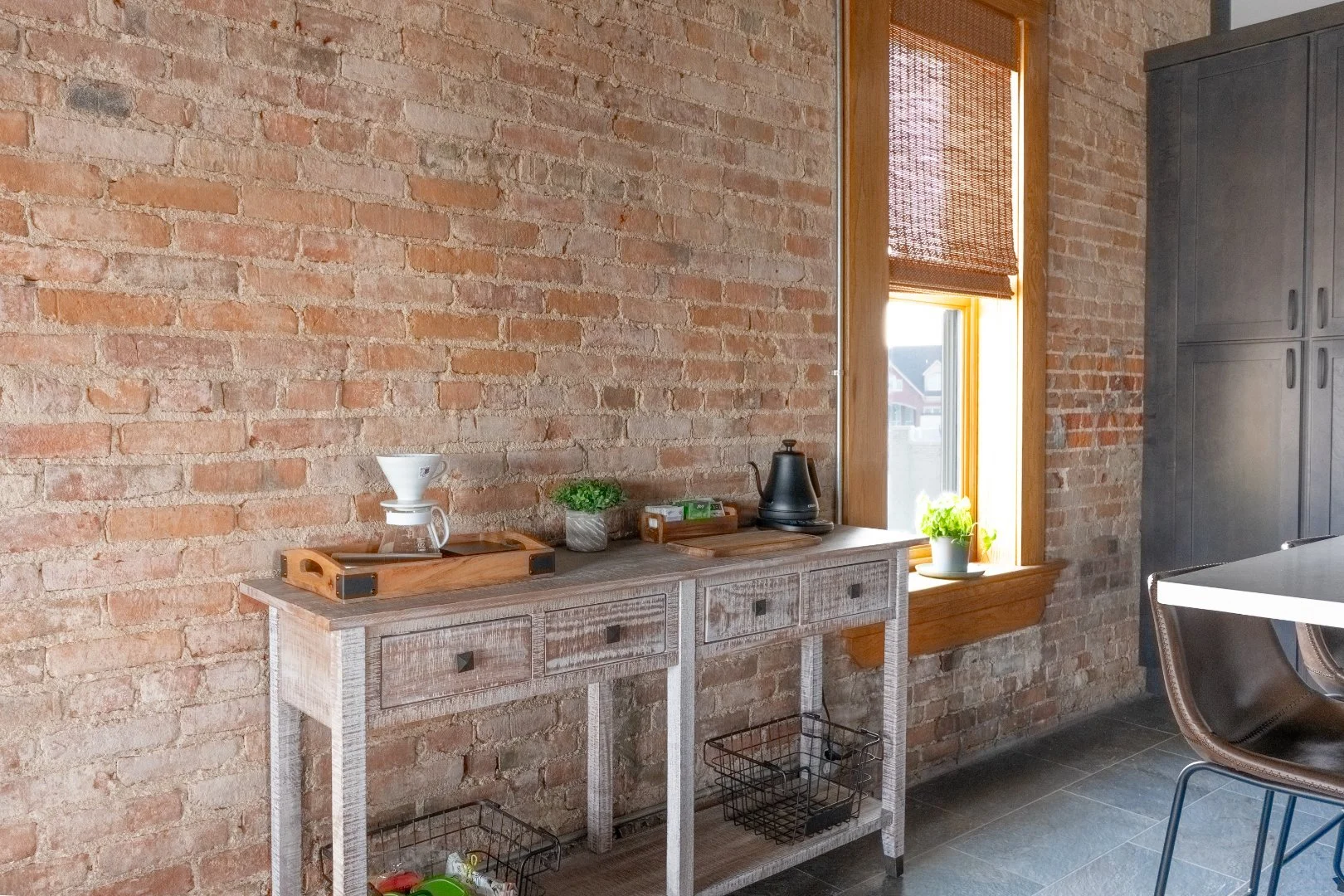
For short-term rentals, wide shots still matter, but they’re the starting point, not the whole set. The strongest listings mix wide-angle shots that explain the layout with detail shots that prove quality and comfort. That means things like the fully stocked coffee station, the stack of folded towels, the fireplace, the reading chair by the window, and the string lights on the patio. Those are the photos that make someone picture their own weekend there.
The balance matters though. Too many close-ups can start to feel vague, like the listing is hiding something. I aim for wide shots that establish each space, then details that sell it. Here are some examples.

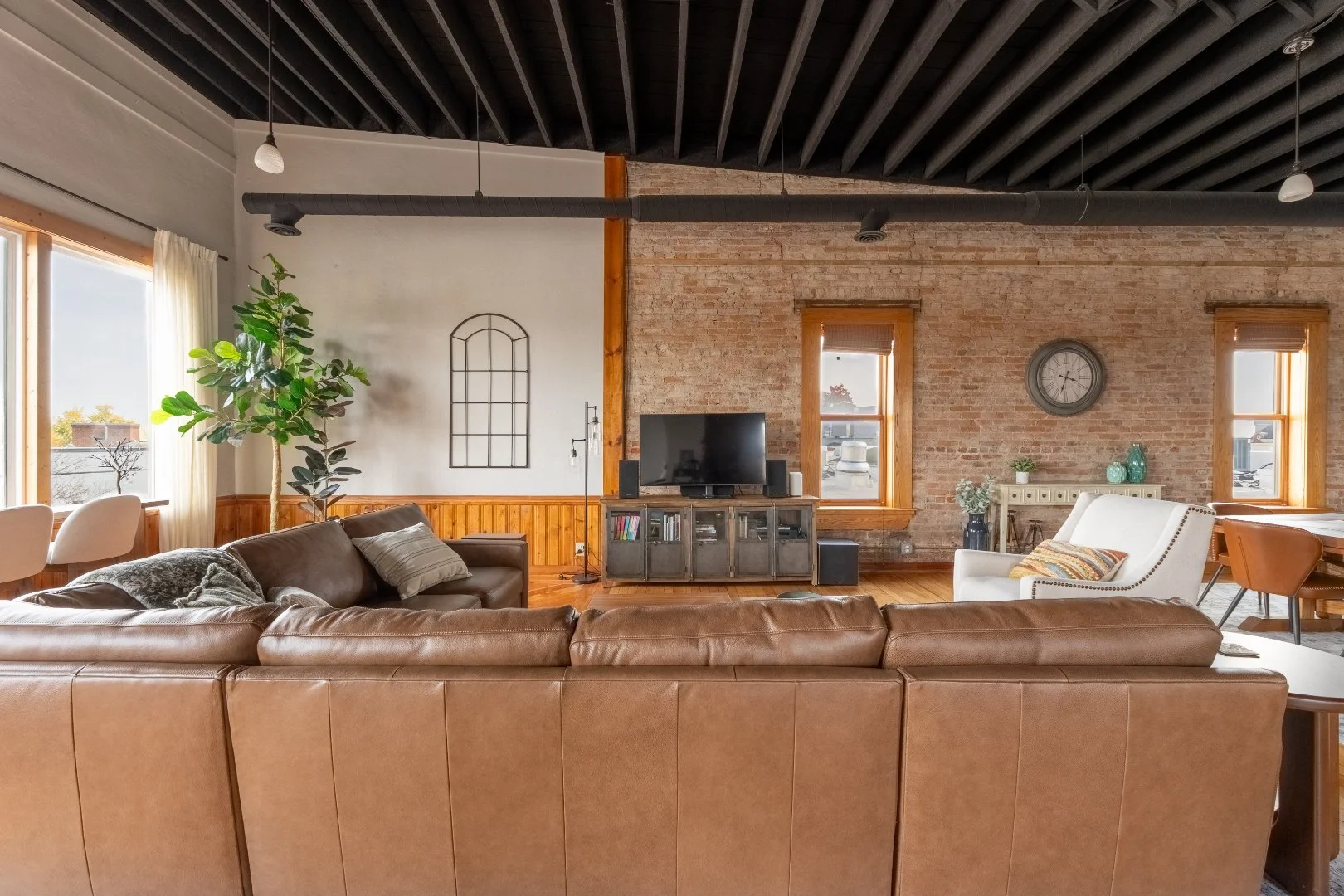
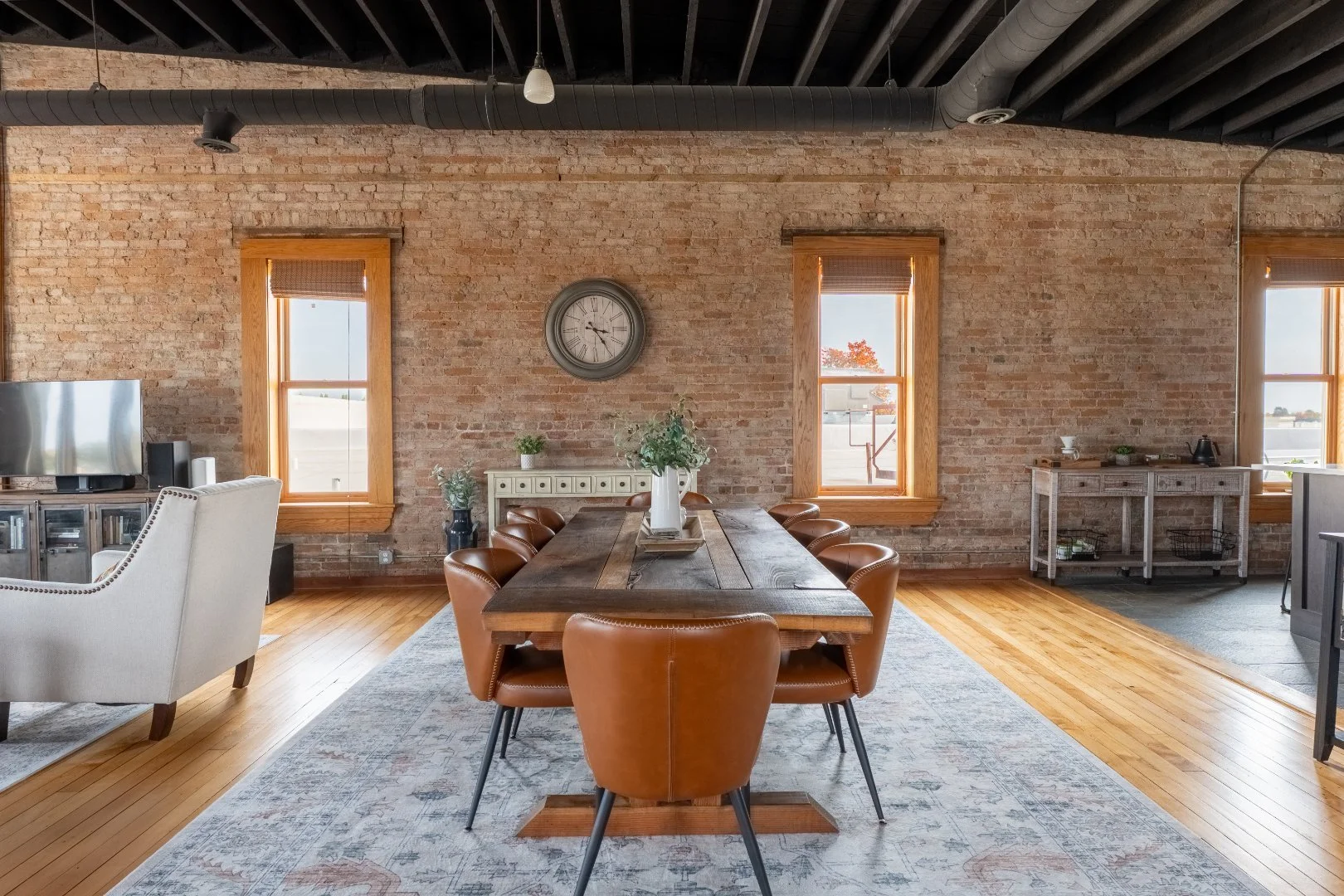
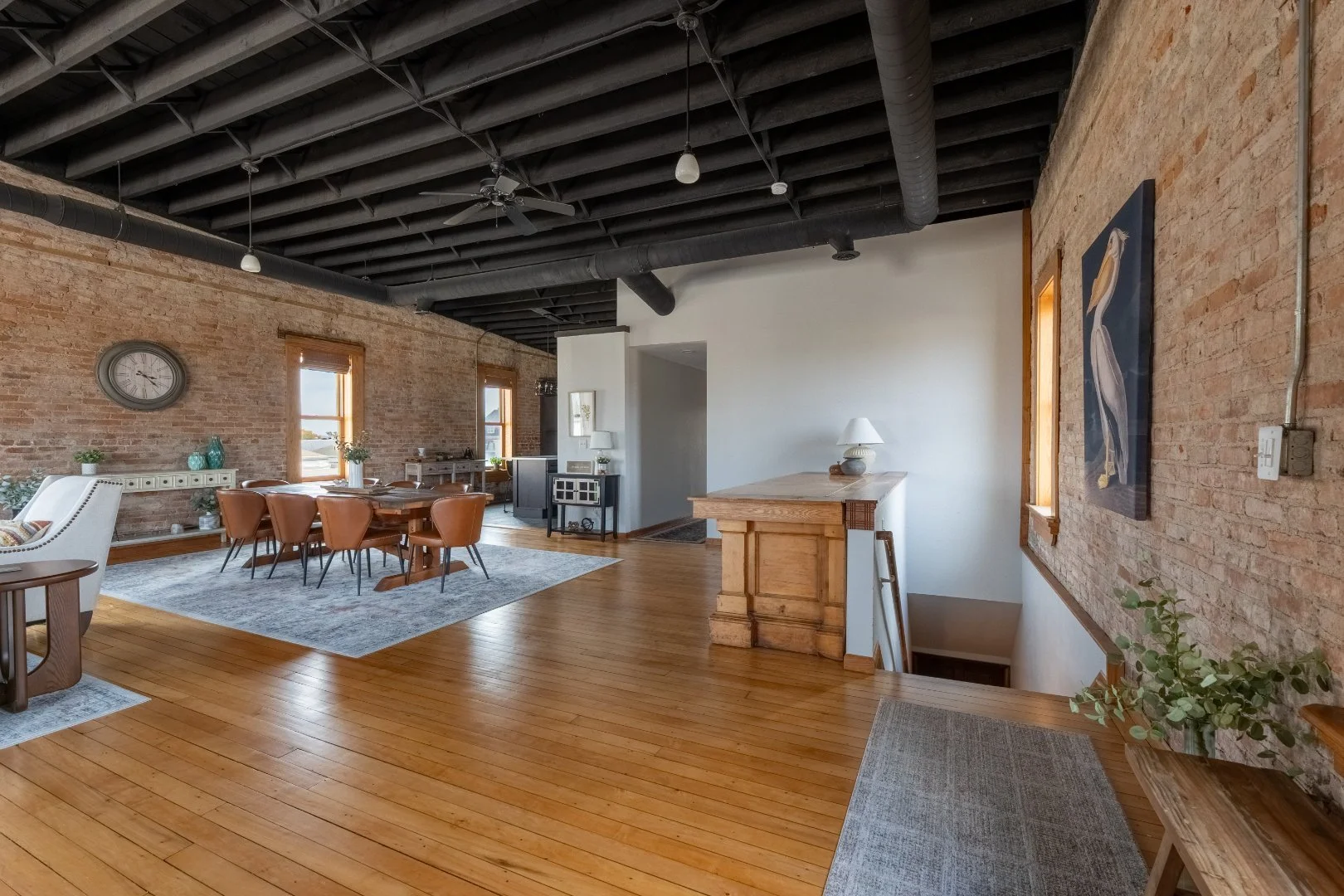
In this real estate photo, I captured the entire living room area with a wide angle lens.
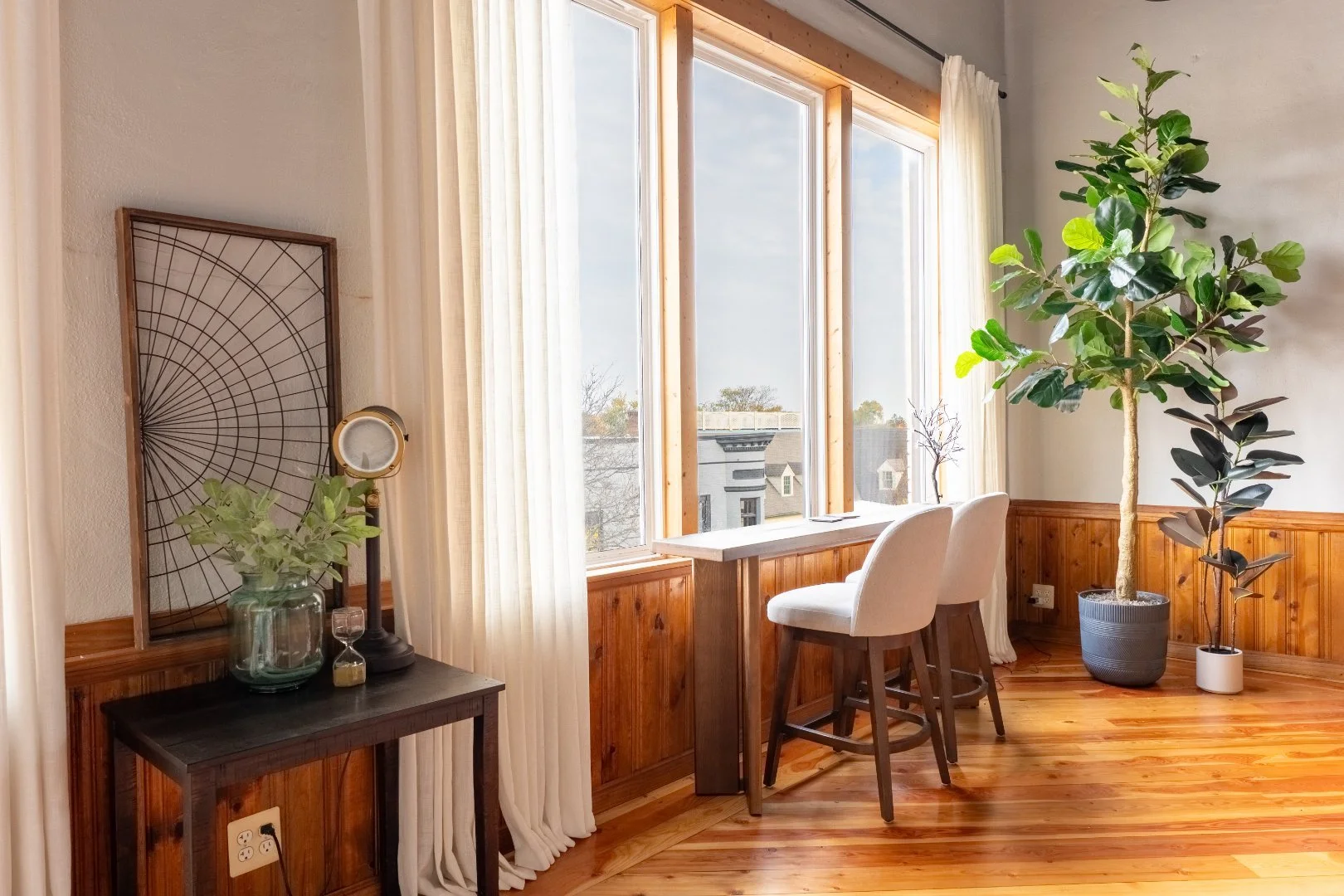
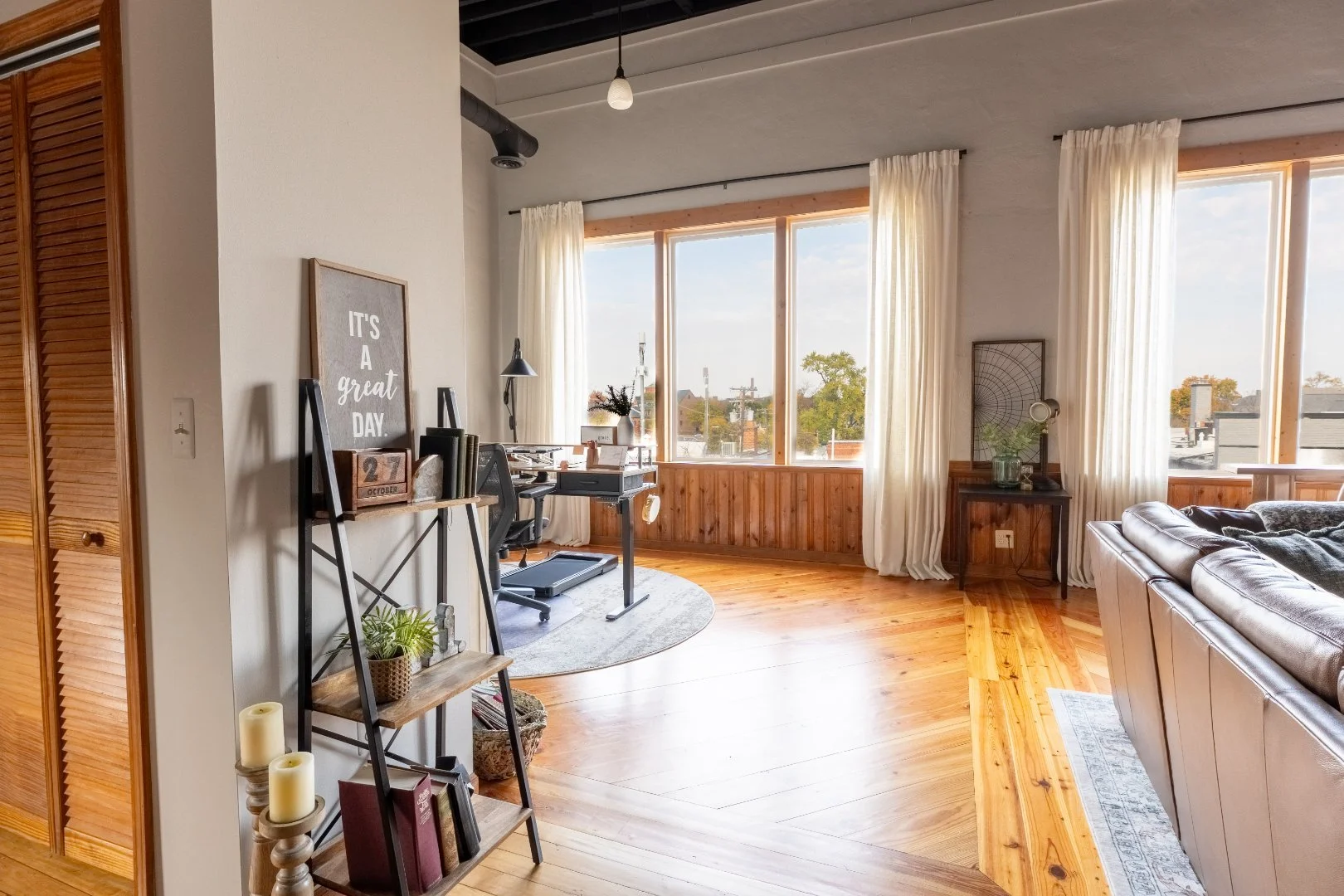
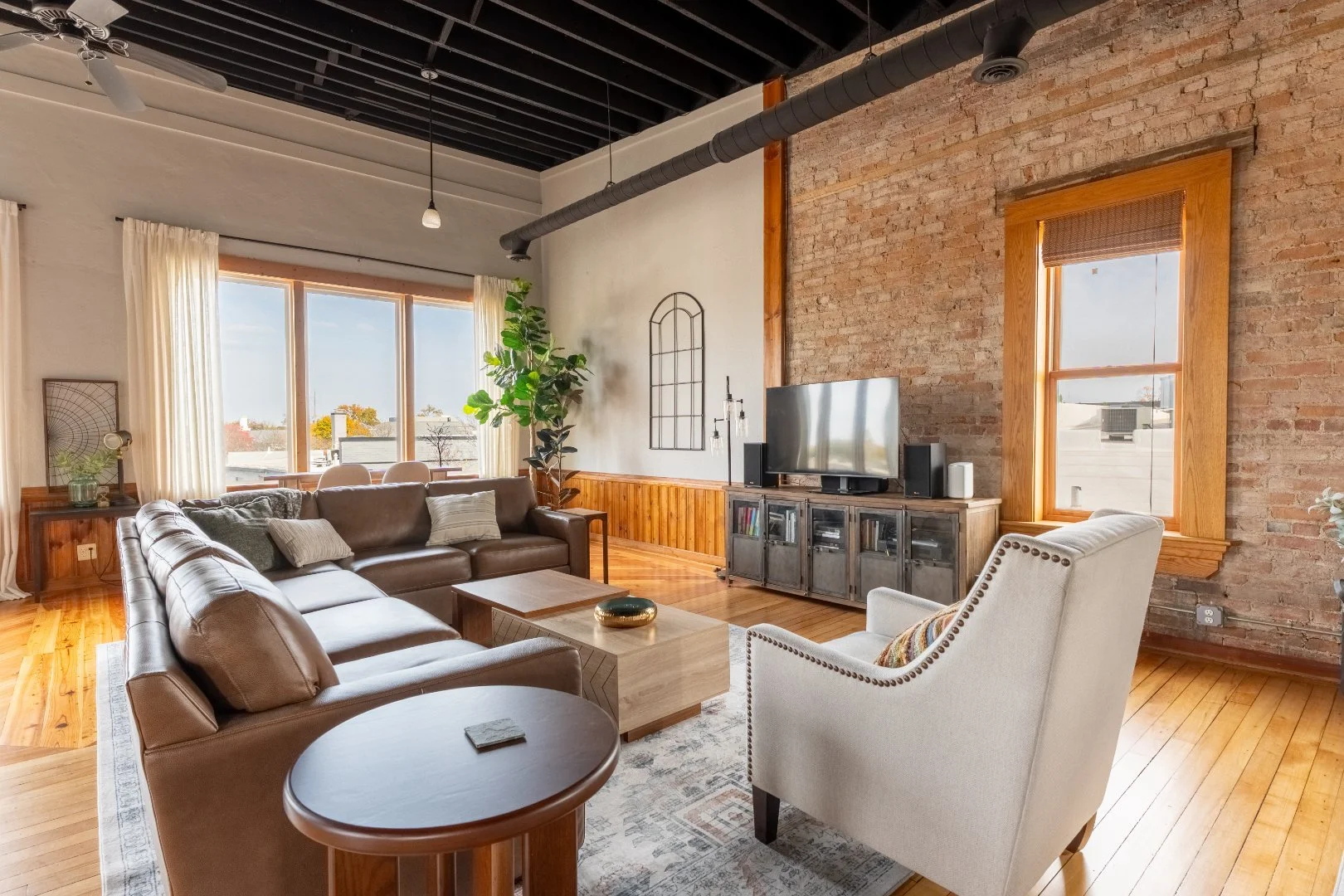
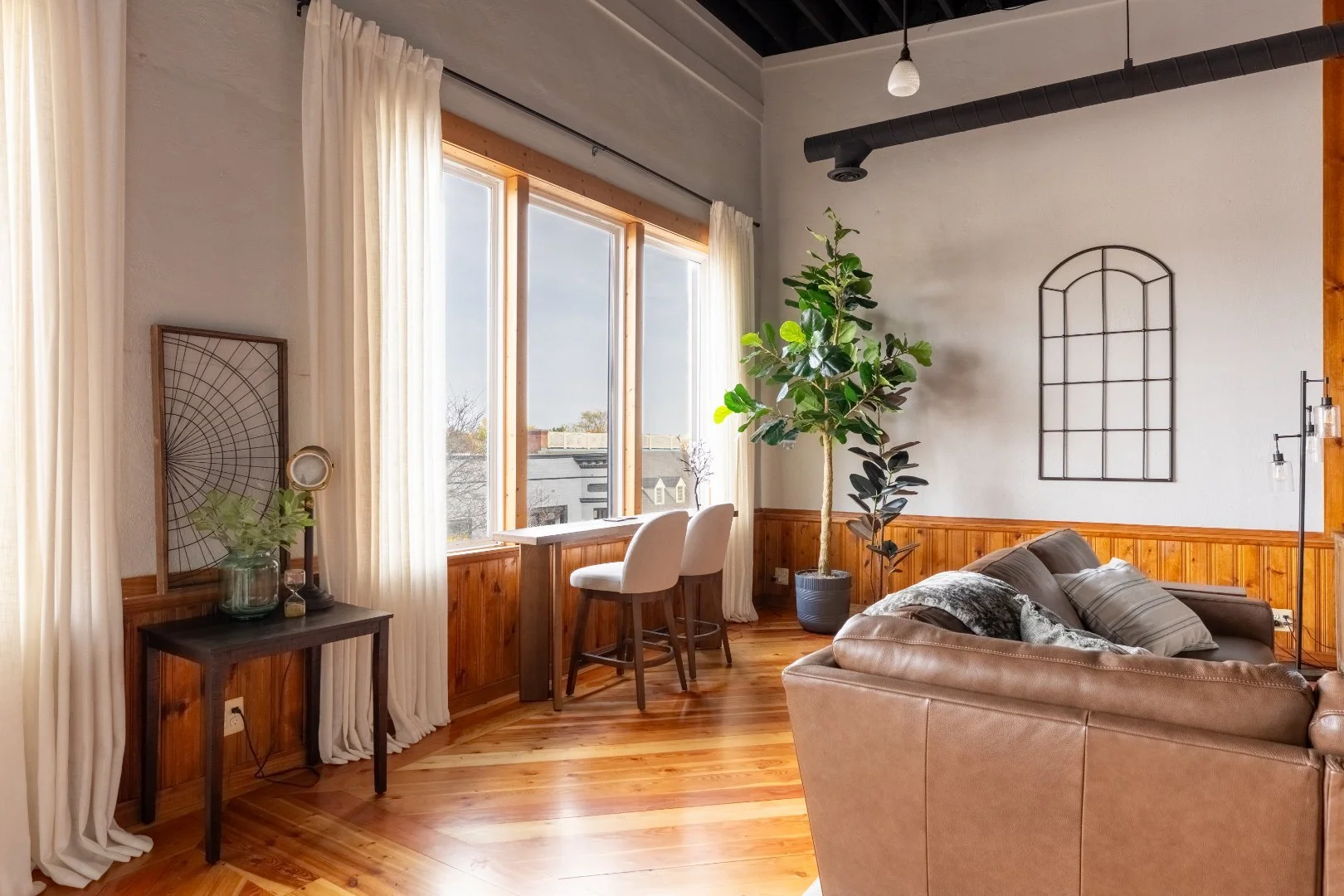
In this short-term rental photo, I highlighted a seating area overlooking the downtown.
Styles of Lighting
This is where the two styles pull apart the most. For real estate, I’m looking for bright, clean, and accurate. Blinds open, lights on, no dark corners, nothing that reads as moody. A buyer needs to see the actual condition of the floors and walls, and shadows hide that. The goal is clarity, so we want lots of lighting.
For short-term rentals, I’m after warmth. Lamps and ambient light do more work, and I’ll lean into the glow from a fireplace or a string of patio lights rather than flattening it out. Airbnb’s own guidance is to open the blinds and shades first and bring in the lights only if the natural light isn’t enough, which is a different starting point than the bright-everything-on approach that real estate calls for.
Evening and twilight shots are also much more common on the rental side. A patio at dusk with the lights on says “vacation” in a way a midday photo never will. For a real estate listing, that same shot would just be a dark photo.
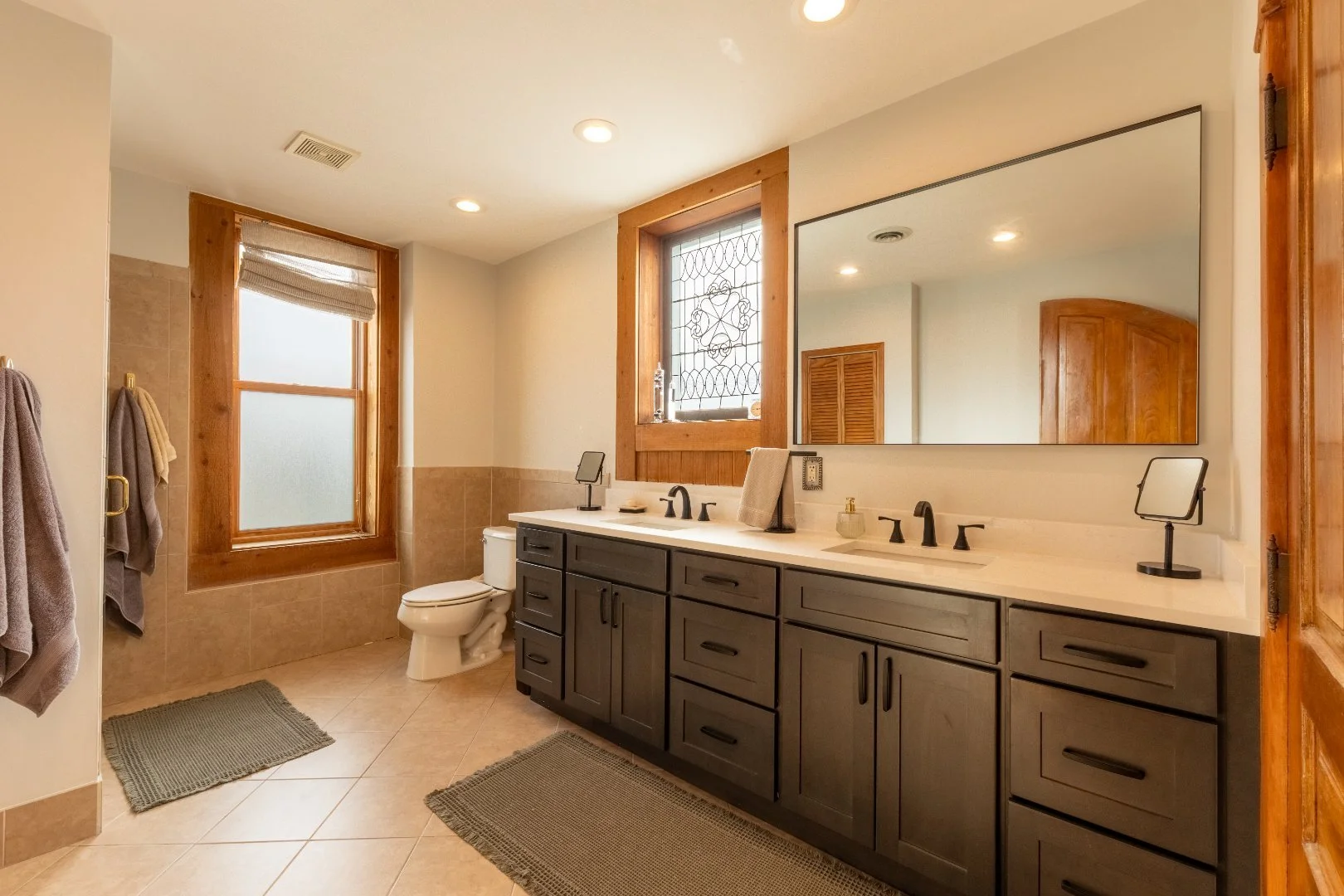
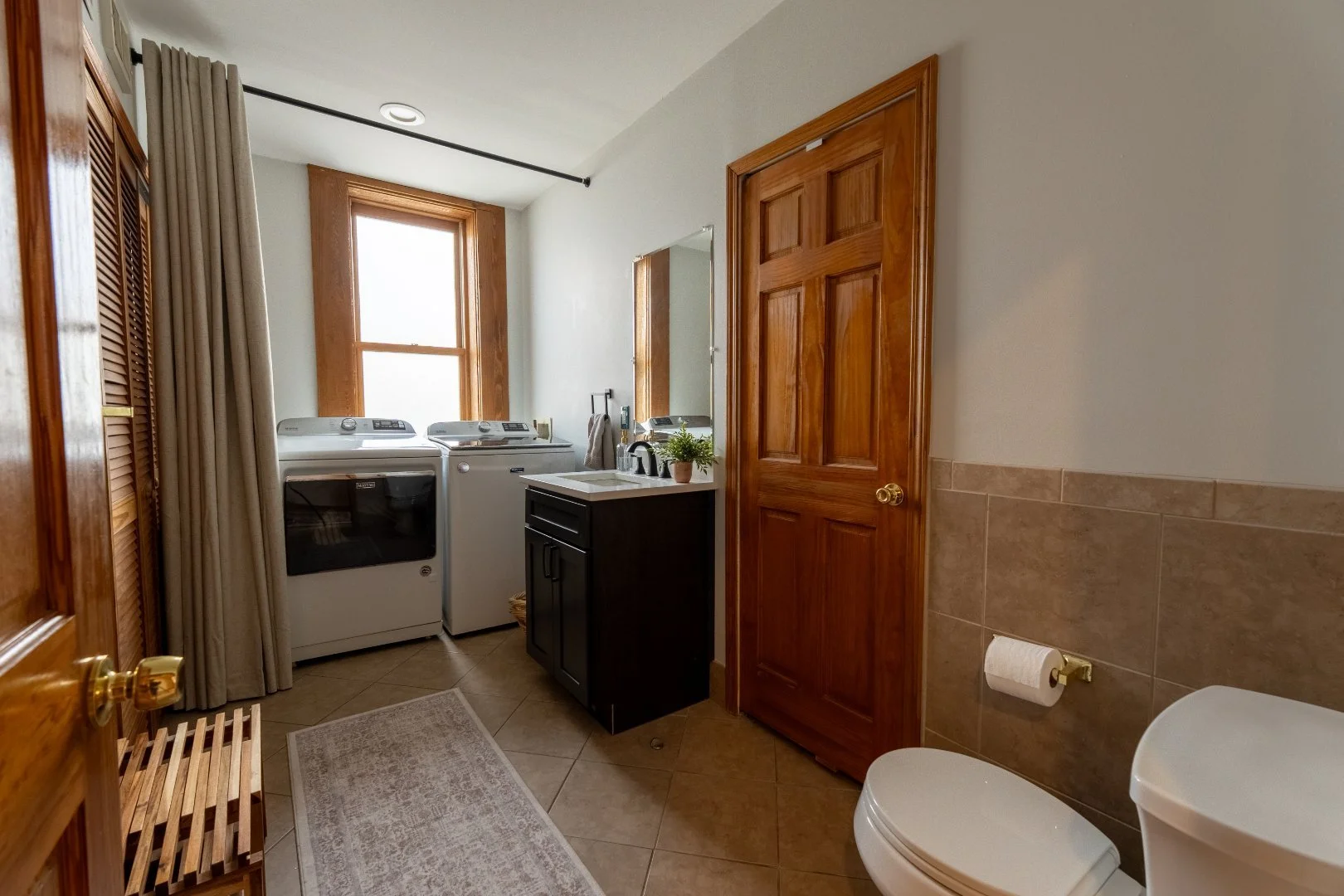
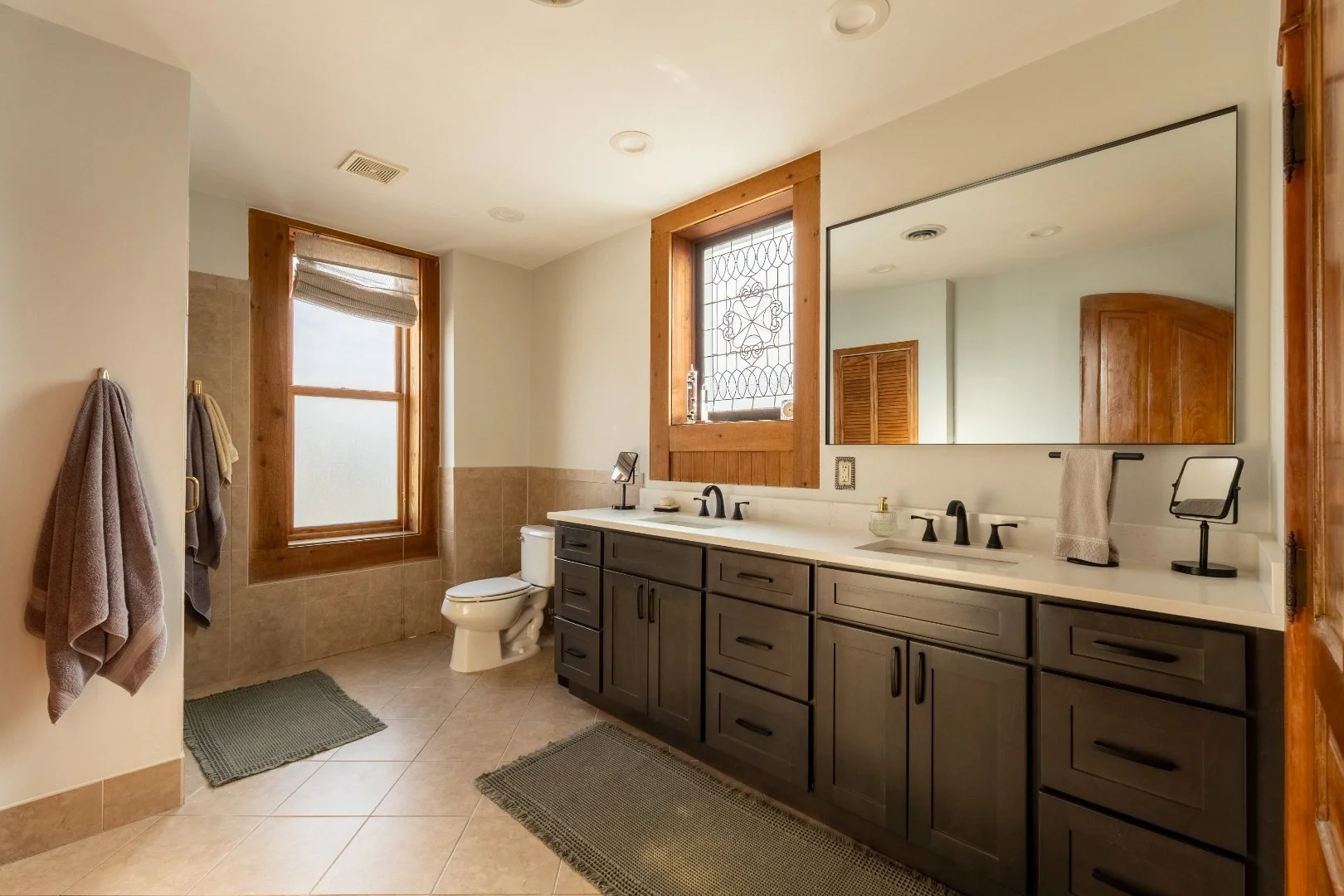
In this real estate photo, I turned on all of the bathroom lights for a bright, clean, and accurate look.
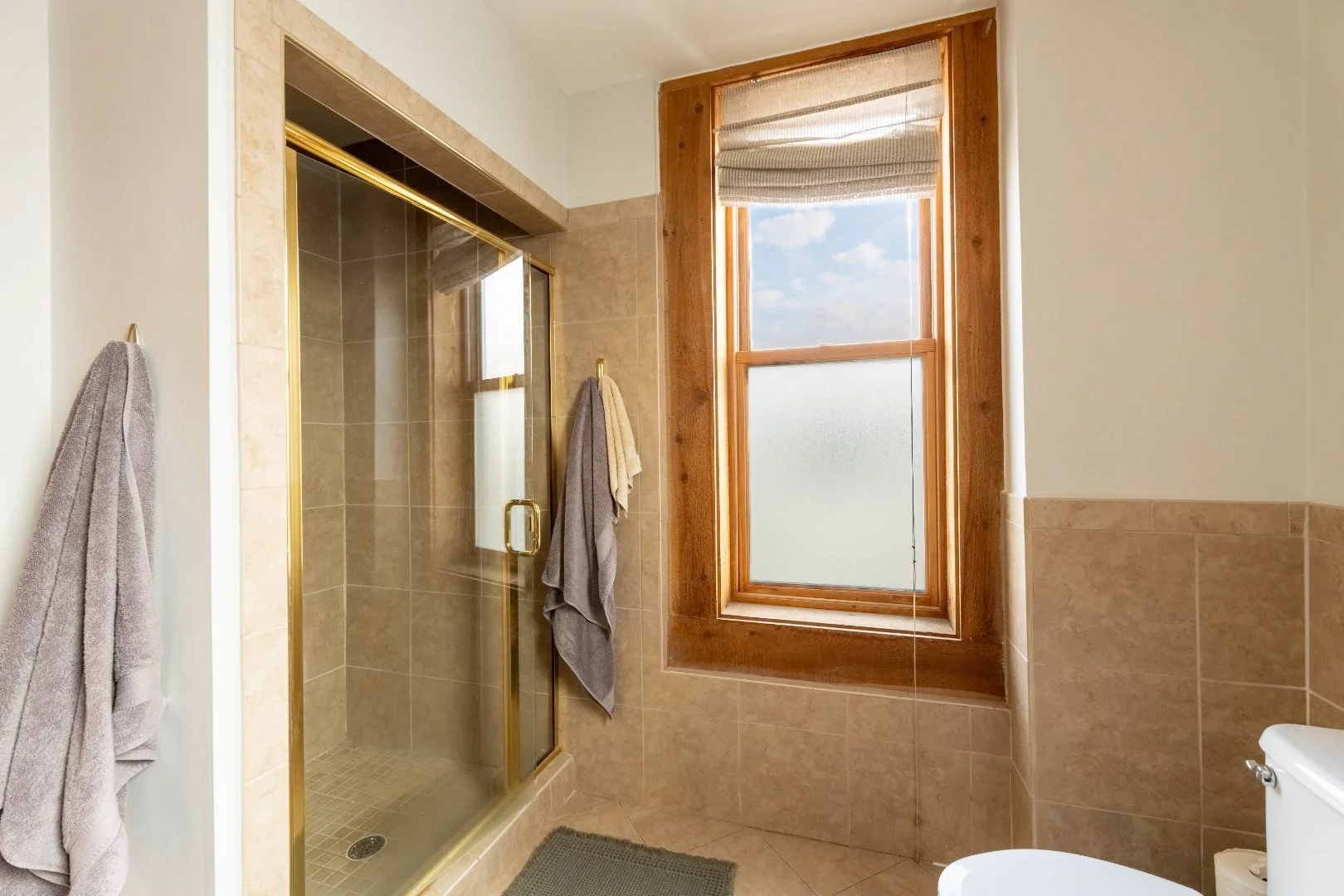
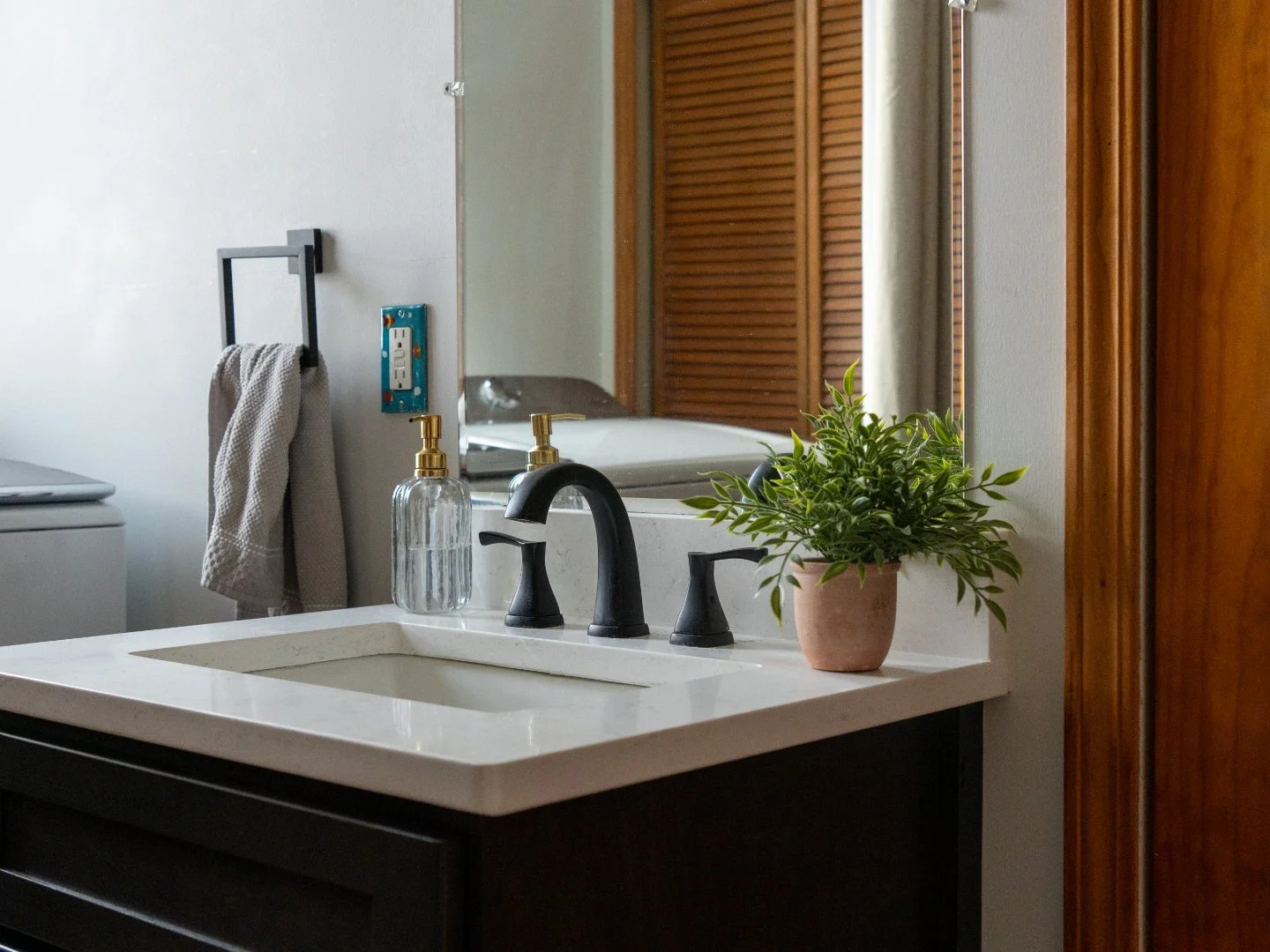
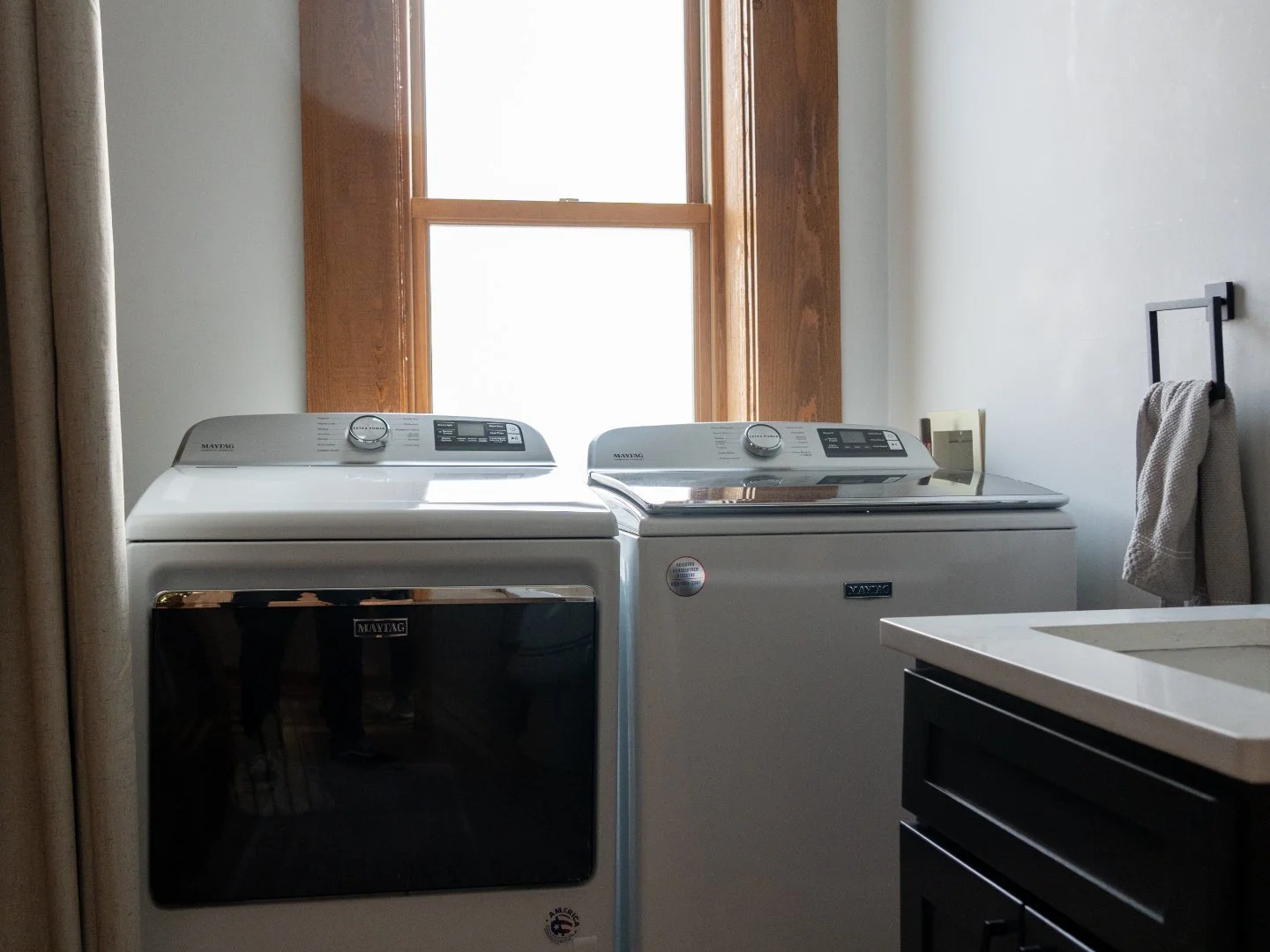
In this short-term rental photo, I worked with only natural lighting and captured more detail of the bathroom.
Staging and Personality
Real estate staging is about neutrality. Clear the counters, remove personal photos, take the magnets off the fridge, thin out the closets. Buyers need a blank enough canvas to picture their own furniture and their own life in the house. Too much personality gets in the way.
Short-term rental staging is the opposite. Guests are specifically choosing a rental over a hotel because it has character. The handmade dining table, the record player, the built-in bookshelves, the quirky art - those are selling points, not clutter. The space should still be clean and uncluttered, but it should look like somewhere specific, not somewhere generic.
Room by Room Examples
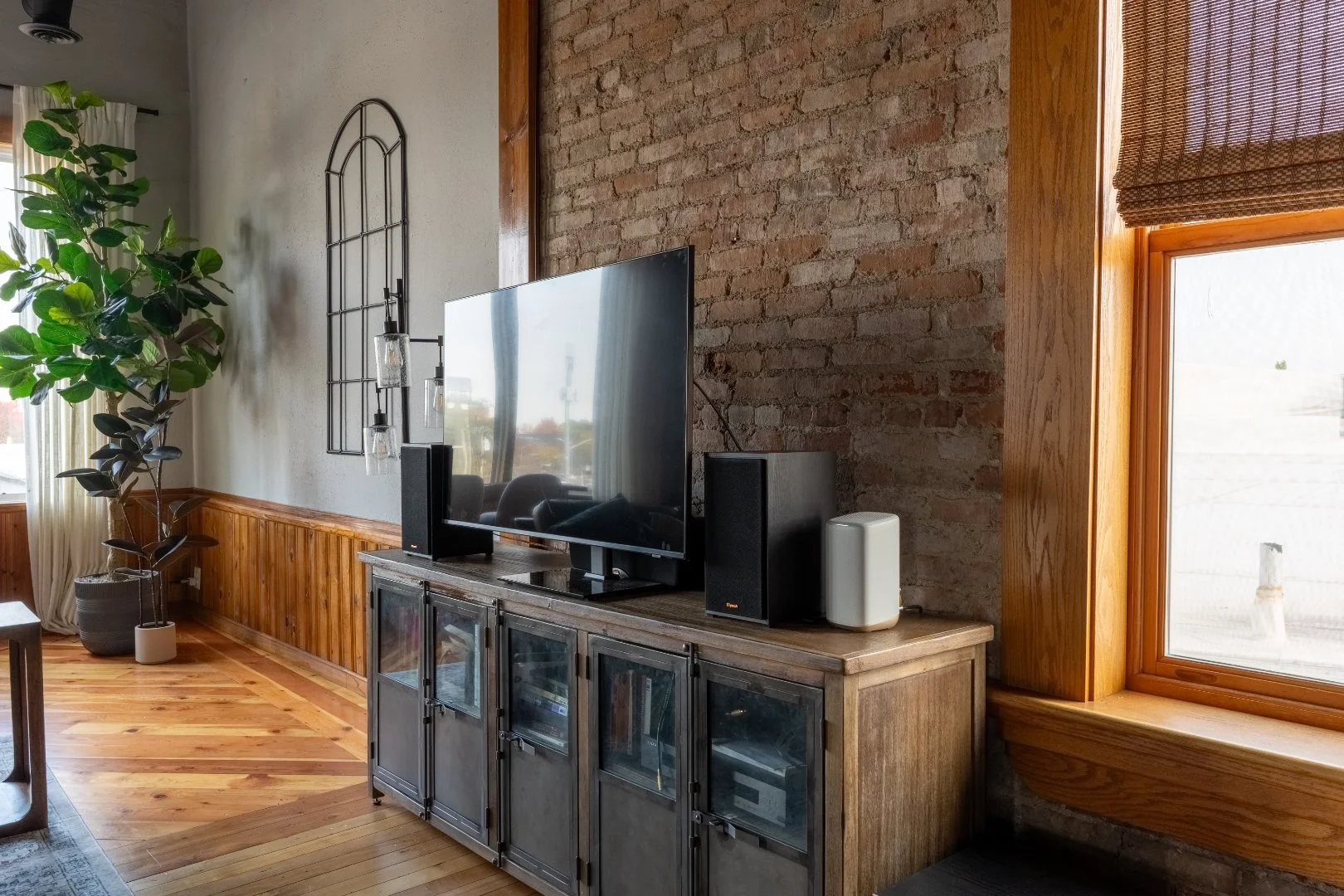
Living room. Real estate gets the wide corner shot showing the full footprint and how it connects to the rest of the floorplan. Short-term rental gets the wide shot plus the cozy angle - the couch with the throw blanket, the view out the window, the TV setup someone will actually use.
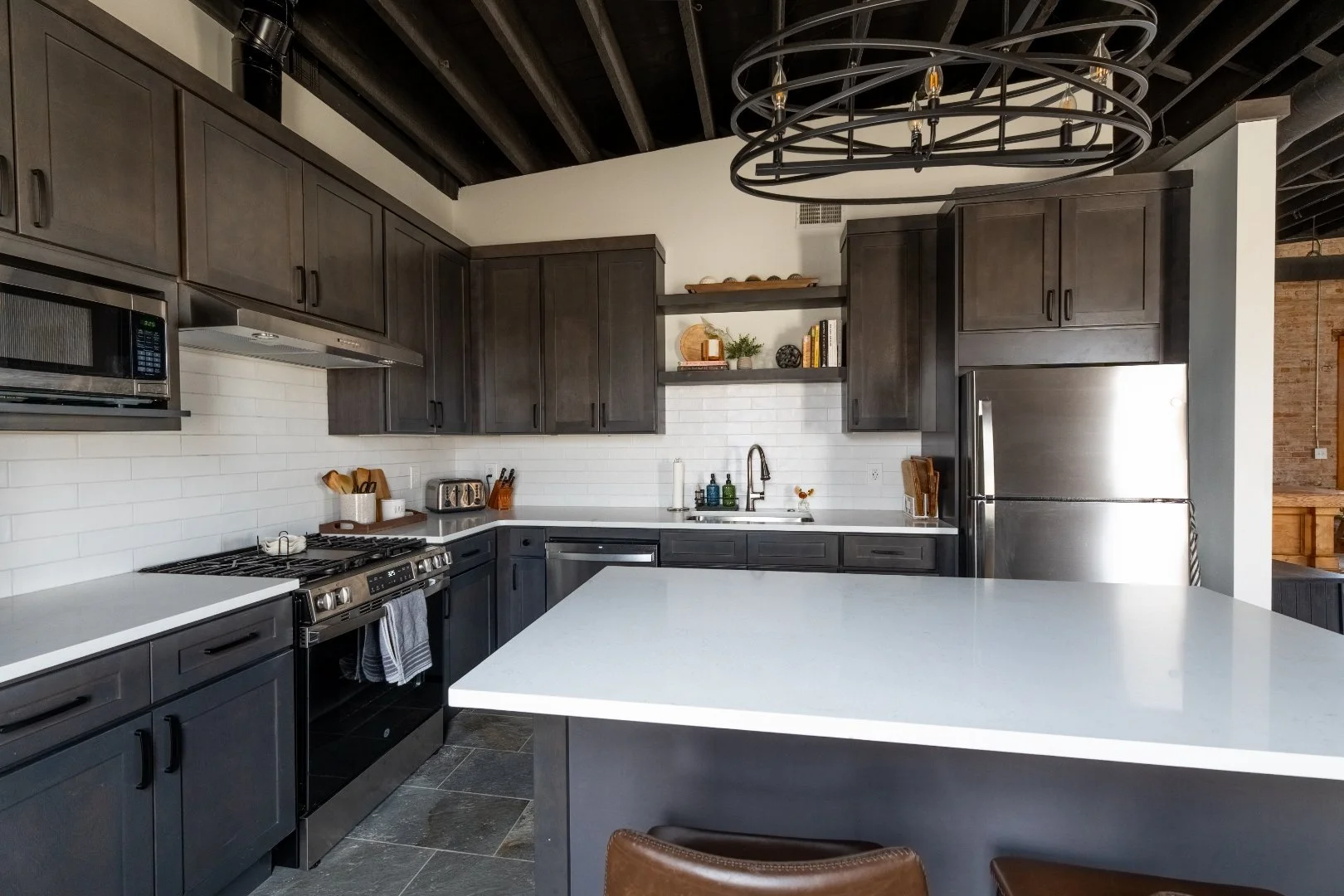
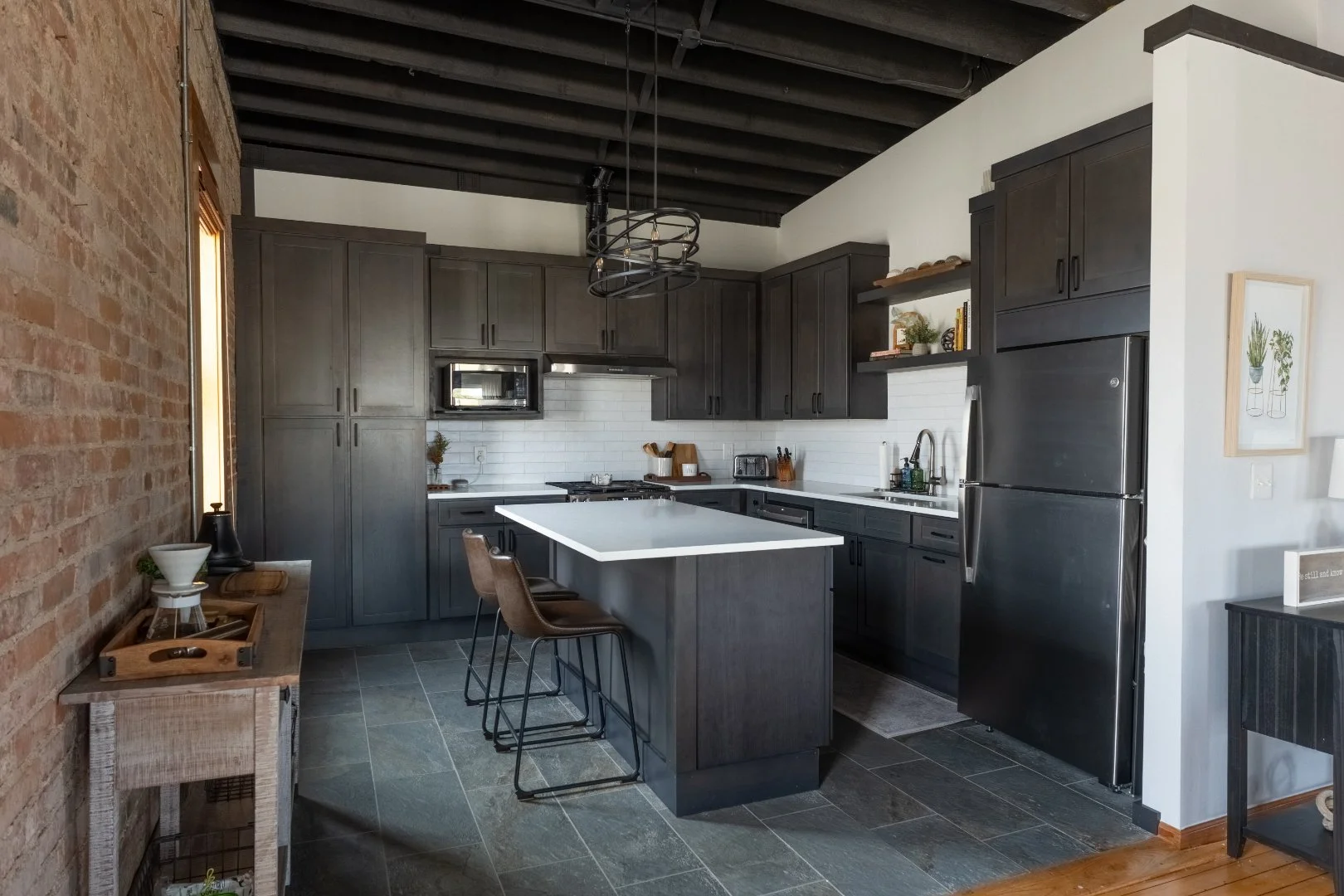
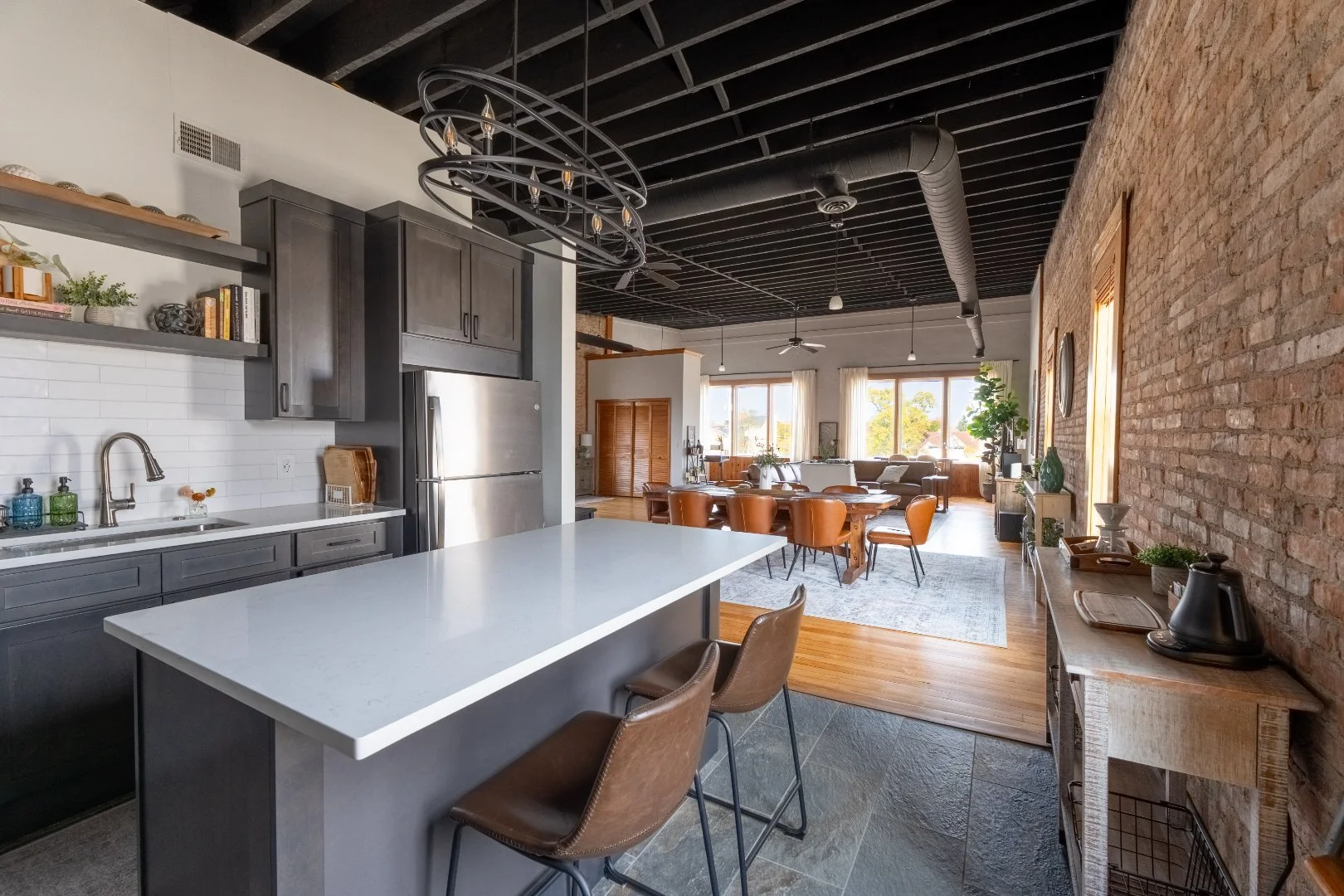
Kitchen. Real estate shows the layout, counter space, appliances, and storage. Short-term rental shows those too, but adds the details guests care about: the coffee maker, the stocked shelf, the island with stools where people will actually hang out.
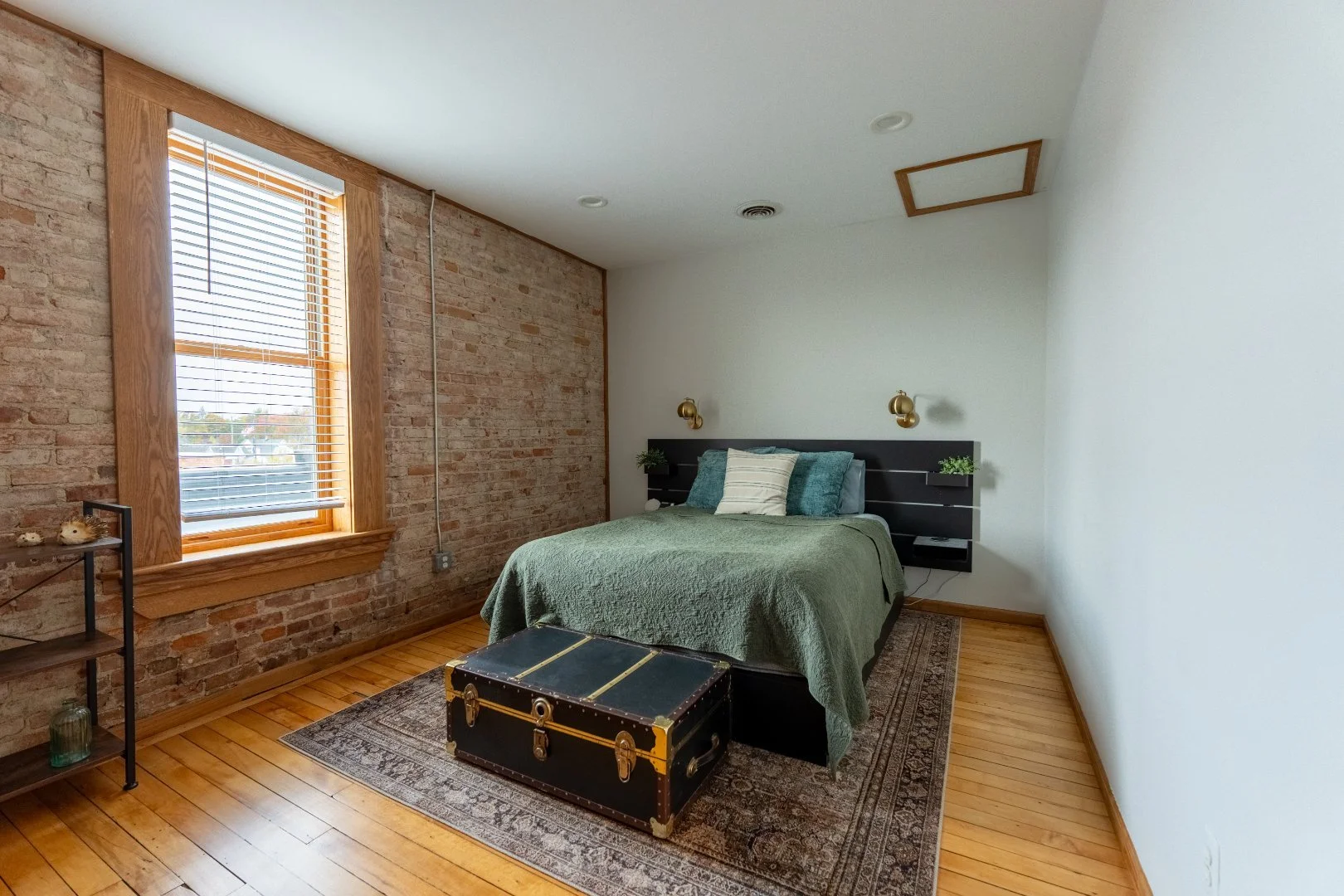
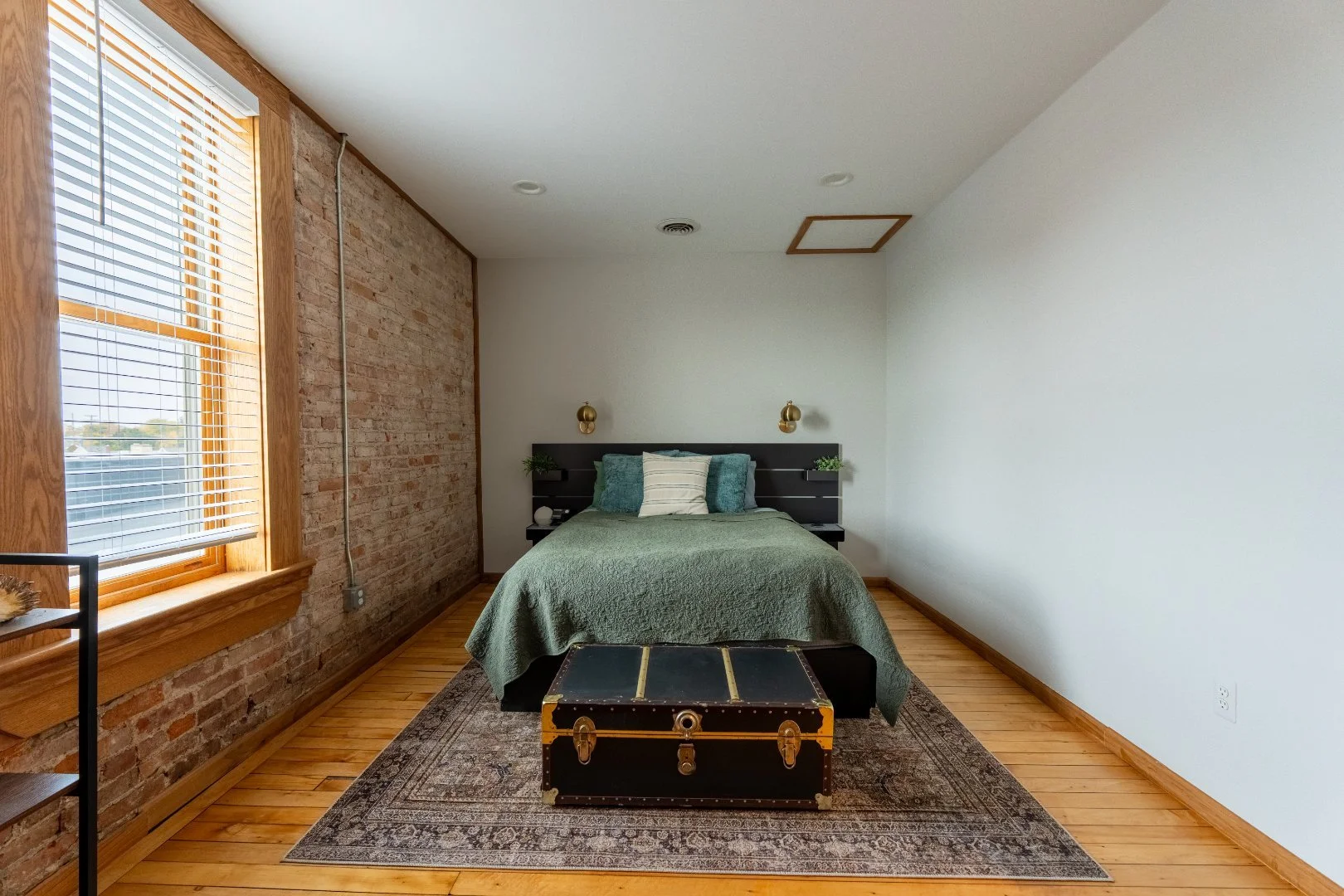
Bedrooms. Real estate shows the full room and the closet, because square footage and storage are the questions. Short-term rental focuses on the bed itself, the bedding, the nightstand, and the lamp, because comfort is the question.
Bathrooms. Real estate shows the full bathroom, including the vanity and shower condition. Short-term rental gets a wide shot plus a detail of folded towels or toiletries, signaling a clean, hotel-quality stay.
Exterior. Real estate needs the front elevation, the yard, the driveway, and the neighborhood context, so buyers understand the lot and can find it when they drive by. Short-term rental needs the arrival shot and the hangout spaces - the firepit, the patio, the deck, the view. If the property is somewhere unique like a lakefront or a walkable downtown, that surrounding area matters even more.
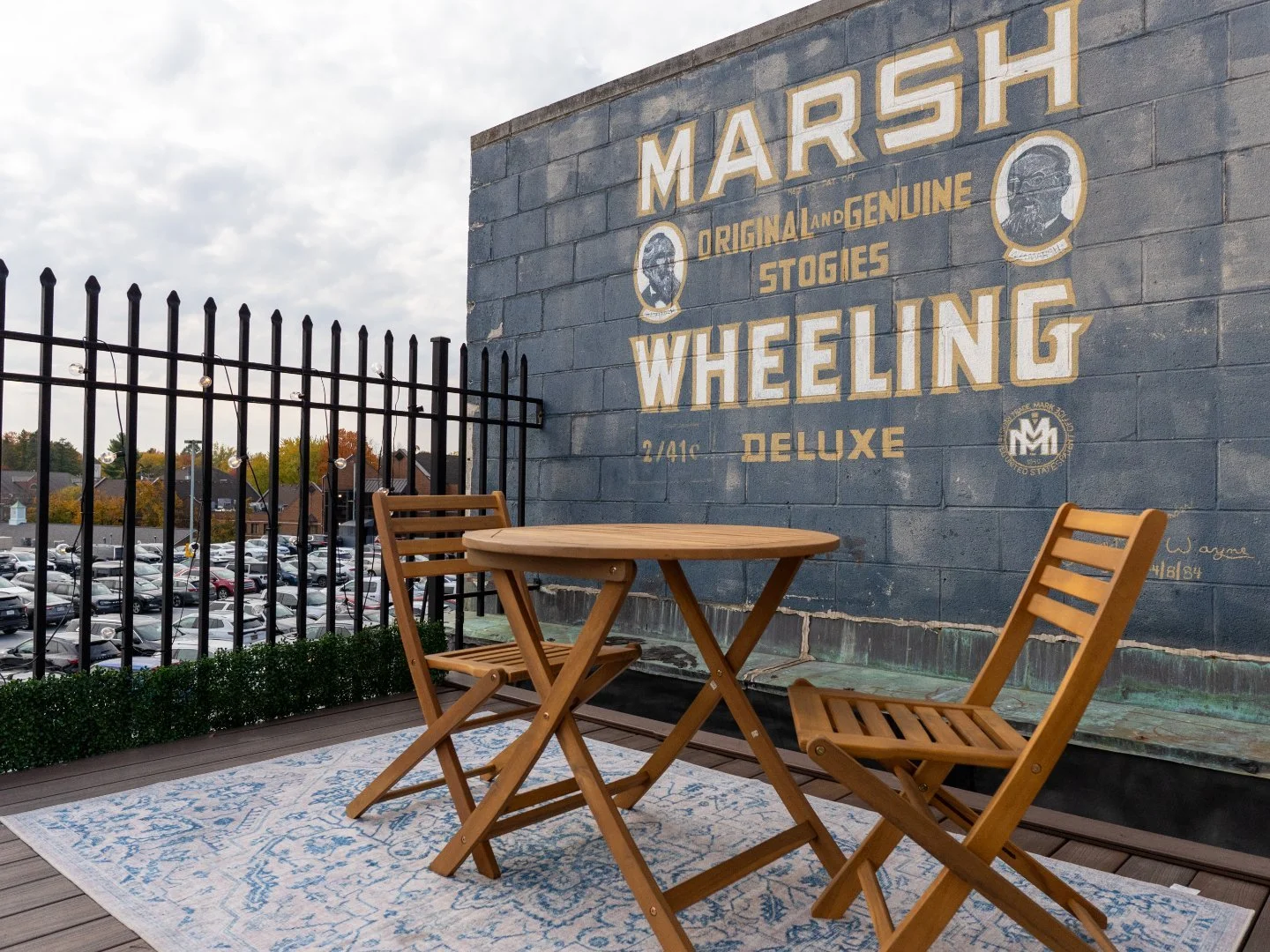
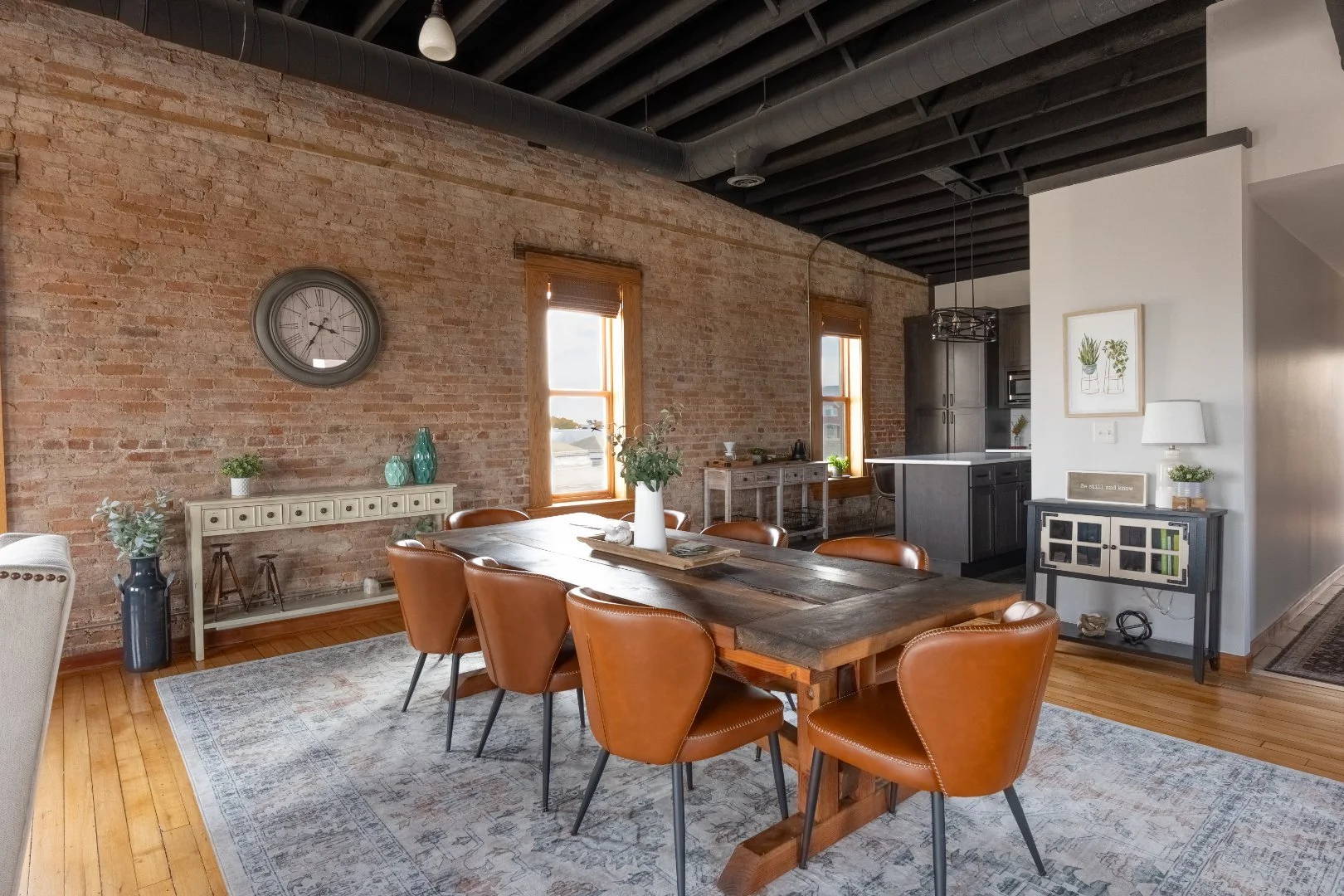
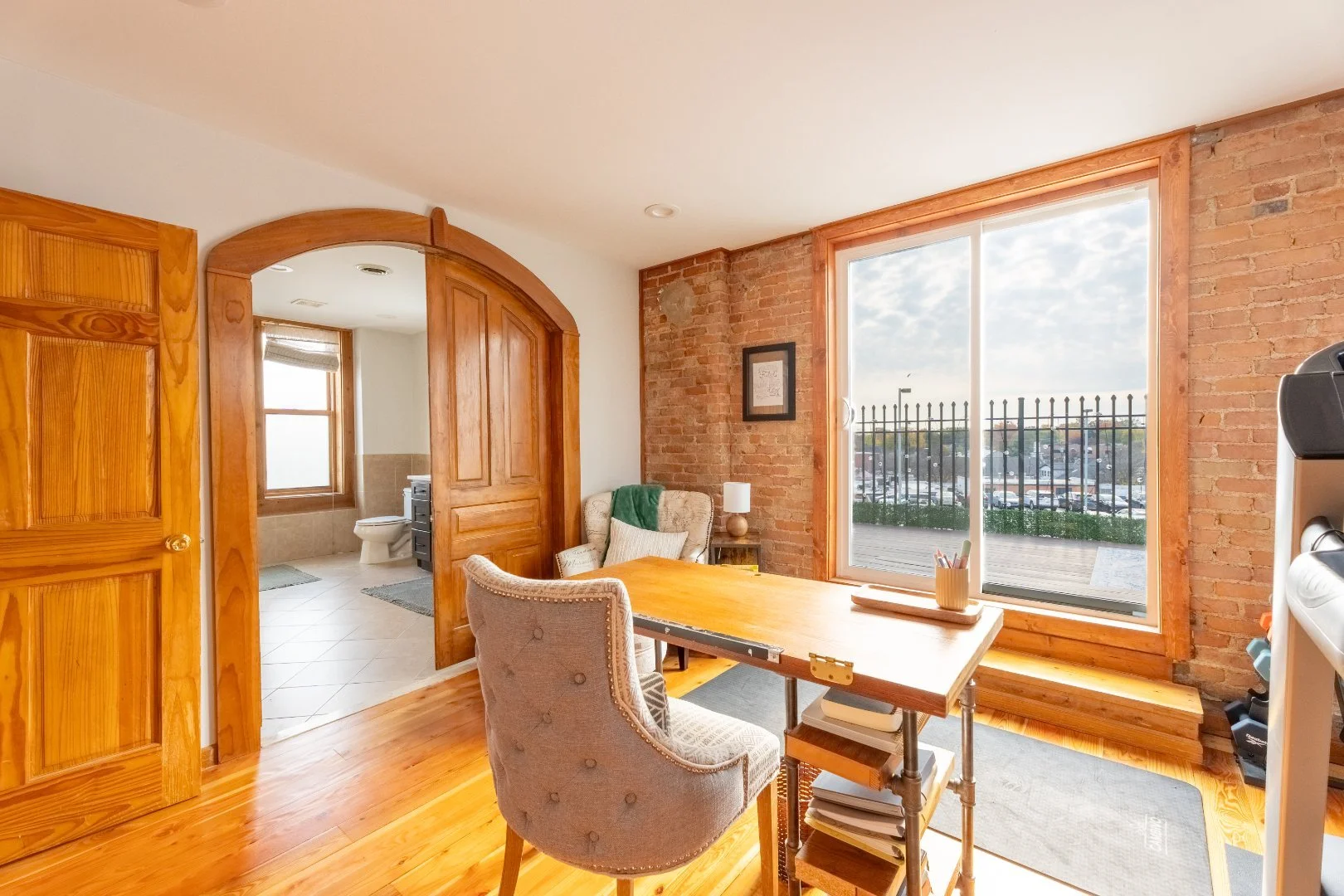
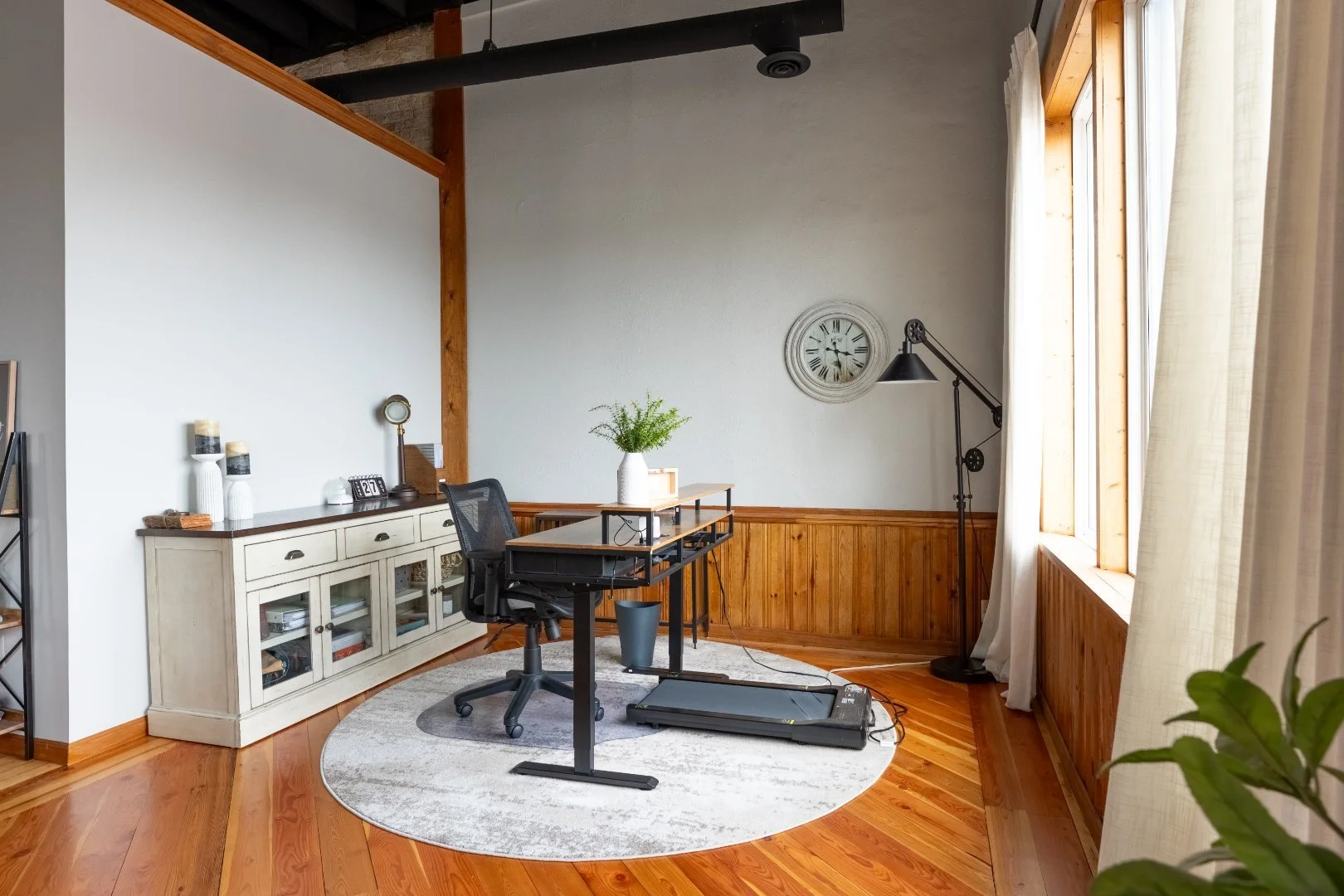
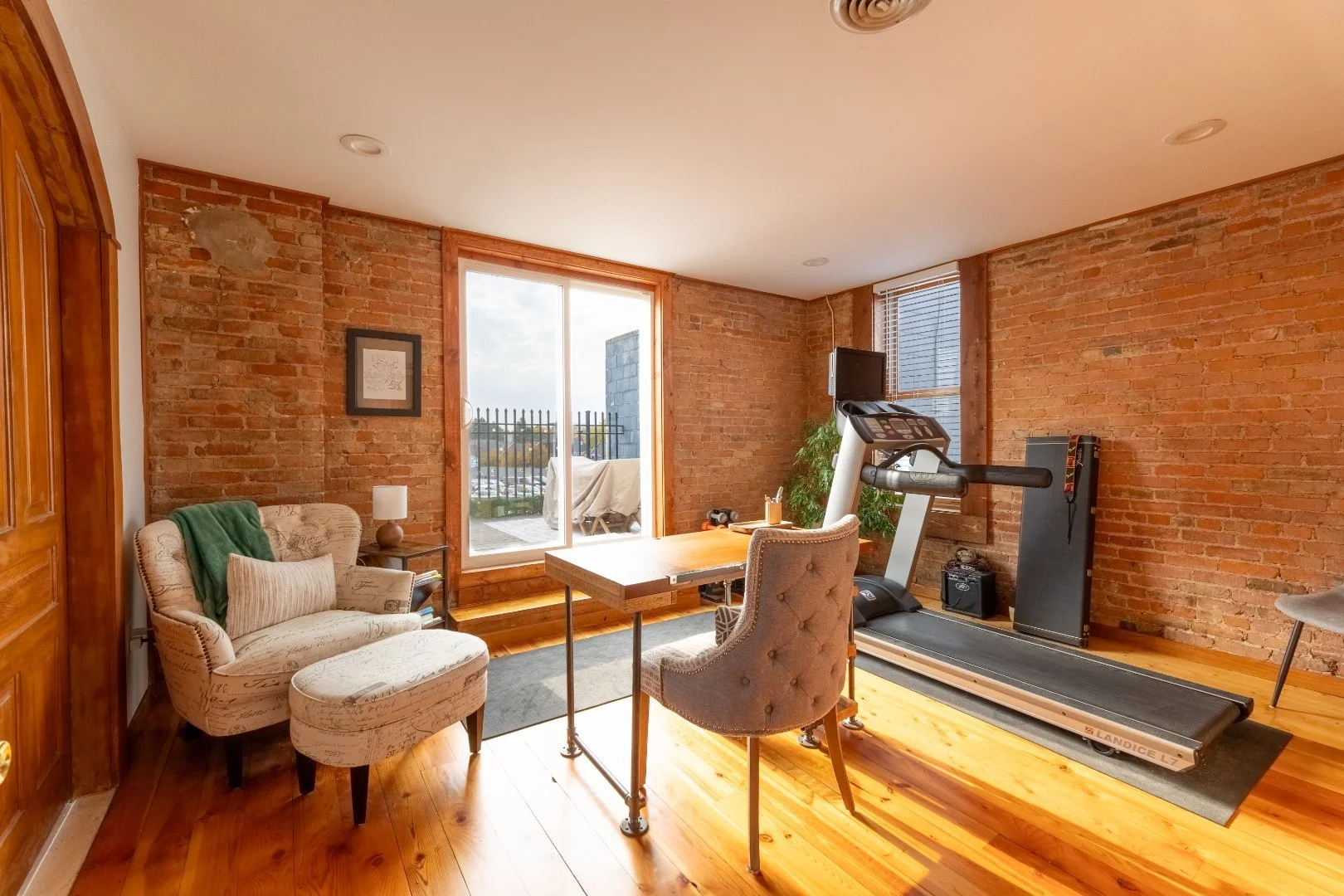
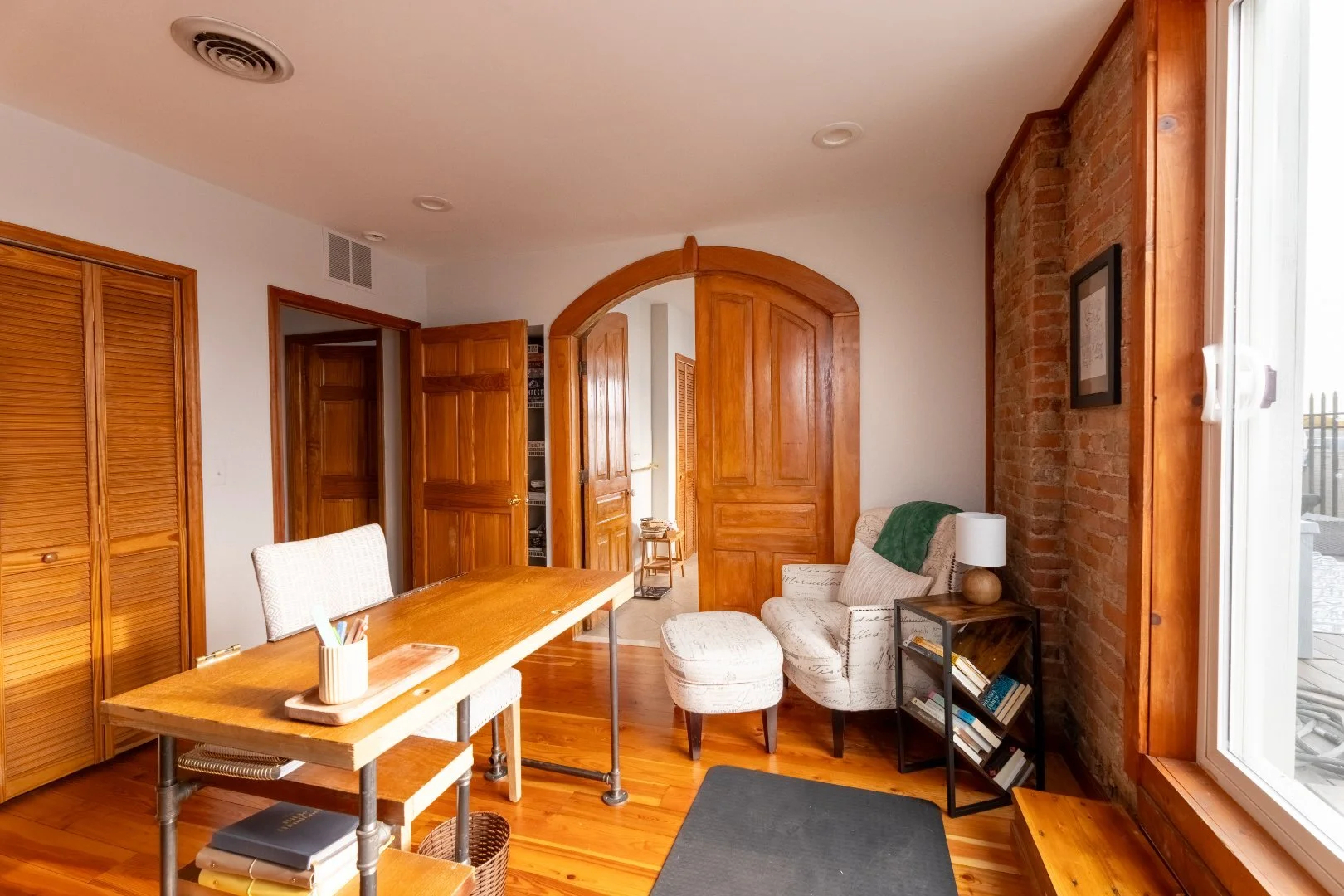
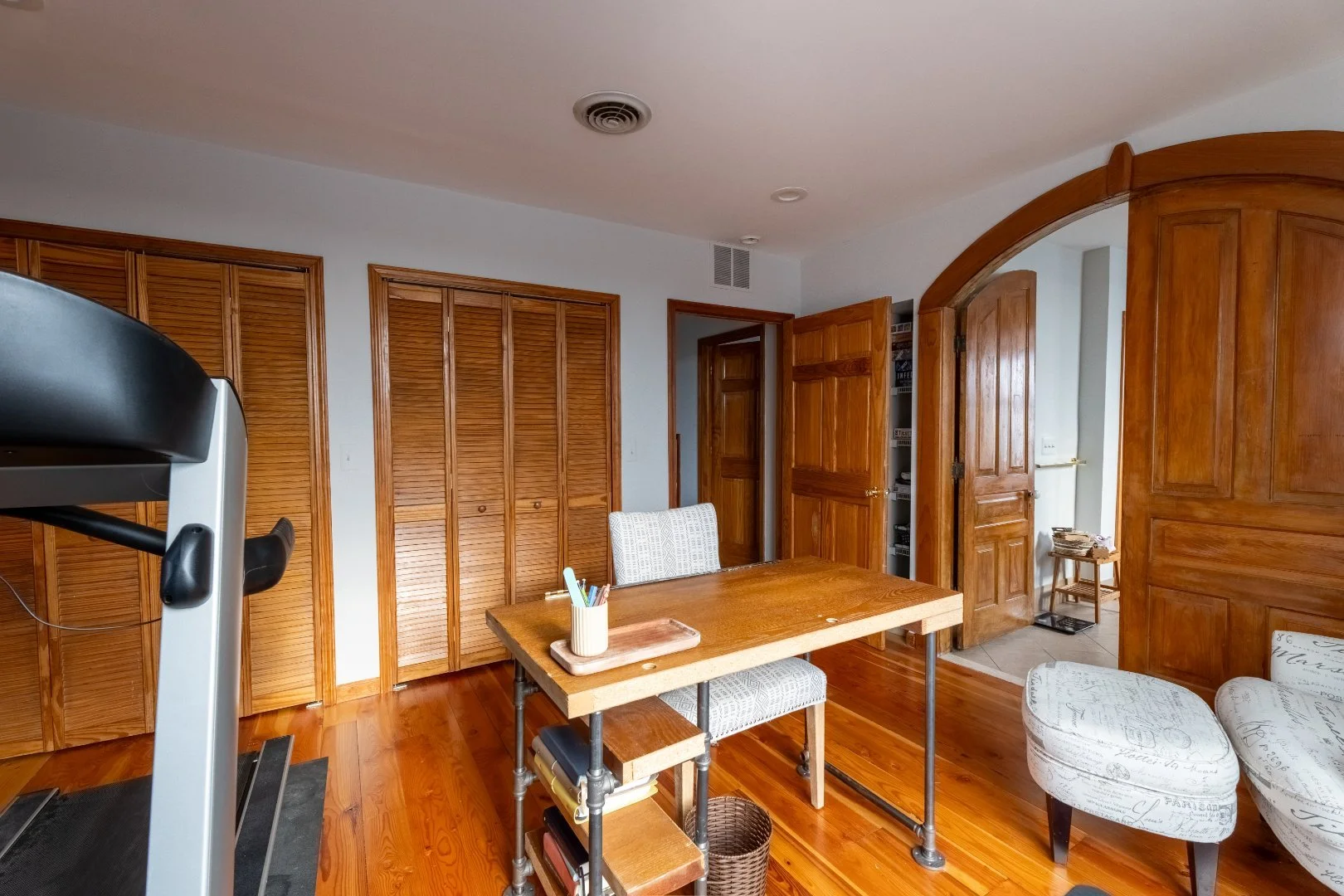
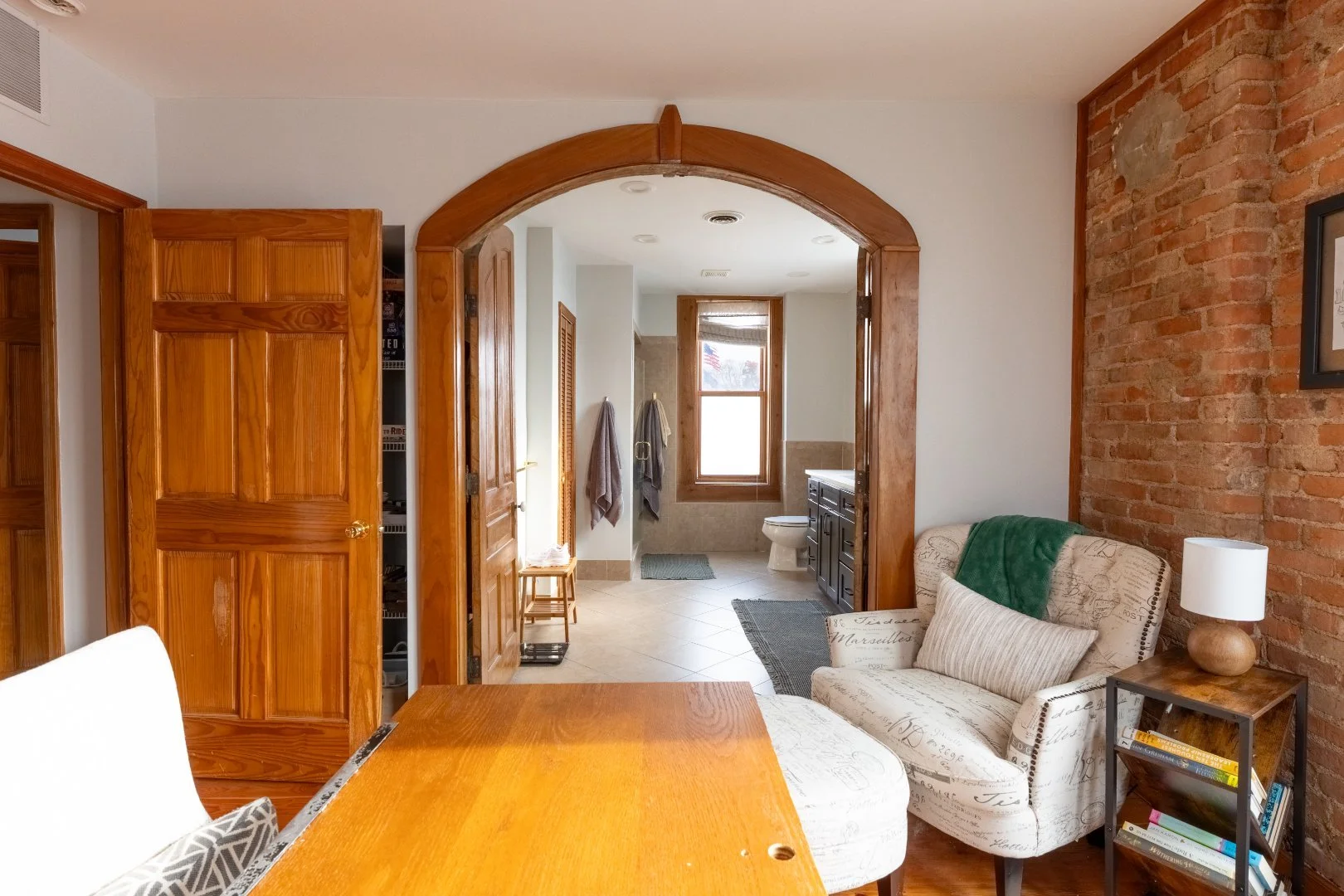
Here are some examples of short-term rental photos from this apartment photoshoot, showcasing details that wouldn’t matter as much in a real estate photoshoot.

Aerial Drone Media for Both
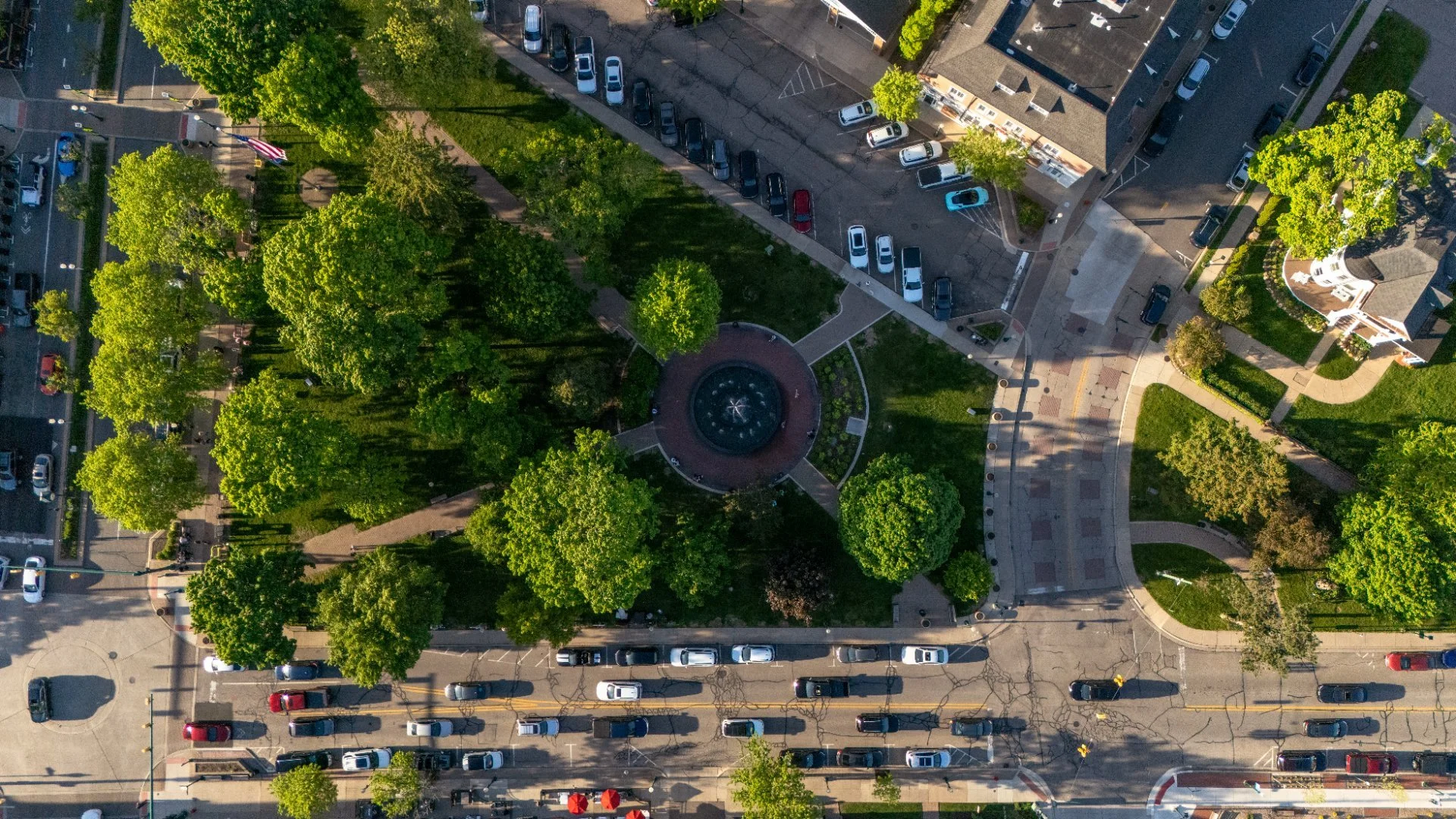
Drone photos help both types of listings, but for different reasons.
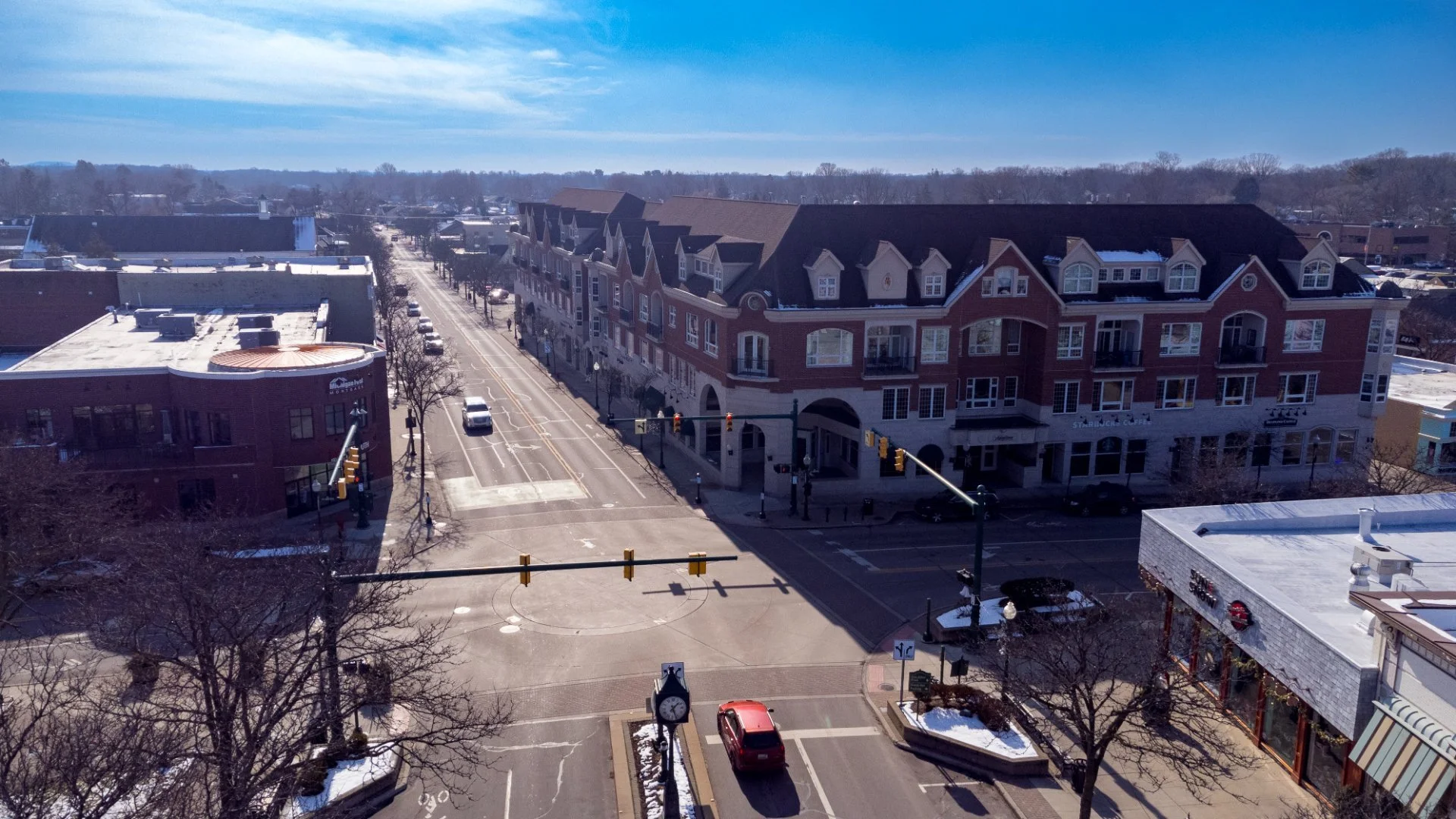
For real estate, drone media shows the lot size, the yard, the roof, the street, and the surrounding neighborhood. When my wife and I were shopping for our first home, being able to see the yard and the neighborhood from above was a big selling point for us.
For short-term rentals, drone media sells the location. If your property is on a lake, near a downtown, or in a setting people are traveling to see, an overhead shot tells that story faster and better than anything on the ground can.
Either way, drone media for a listing is commercial work, so you need a photographer who is FAA Part 107 licensed. This cannot legally be done by an unlicensed drone enthusiast. I’m Part 107 licensed and fly a DJI Mavic 3 Pro Cine.

A Few Practical Differences
Photo count. Real estate listings tend to run leaner, enough to cover every room clearly. Airbnb recommends at least 20 photos so guests get a full view of the property, and according to what I’ve read online, rental listings generally support more images than an MLS listing does.
Orientation. Listing platforms display photos in landscape, so vertical shots get awkwardly cropped. I shoot horizontal for both.
Seasonality. Real estate photos are shot once and the house sells. Short-term rental photos live on the listing for years, so it’s worth refreshing them after a renovation, a redecorate, or a change in season.
Can You Use the Same Photos for Both?
Sort of, but you’ll be leaving something on the table.
Real estate photos used on an Airbnb listing tend to feel cold and empty. They answer questions nobody is asking about a two-night stay. Airbnb photos used on an MLS listing tend to feel incomplete, because they skip rooms or details about spaces and don’t show enough of the house.
If you own a property that you’re going to list for sale eventually and rent short-term now, tell your photographer. I’ll shoot both sets in one visit, the way I did for the loft apartment in Plymouth. It’s more efficient than booking twice.
Let’s Work Together
Whether you’re a real estate agent with a listing coming up or a short-term rental host in Southeast Michigan - including Plymouth, Northville, Novi, Canton, South Lyon, Brighton, Howell, Livonia, and Wixom - I’d love to work with you. I offer interior, exterior, and aerial drone photography for home listings, apartments and condos, Airbnb, Vrbo, and other short-term or long-term properties.
Reach out to D Morby Media today and let’s talk about what your listing needs.
We link to the camera, drone, and lighting gear we use on real shoots. Some of these are affiliate links, so we may earn a commission if you purchase through them. As an Amazon Associate, I can earn from qualifying purchases.